
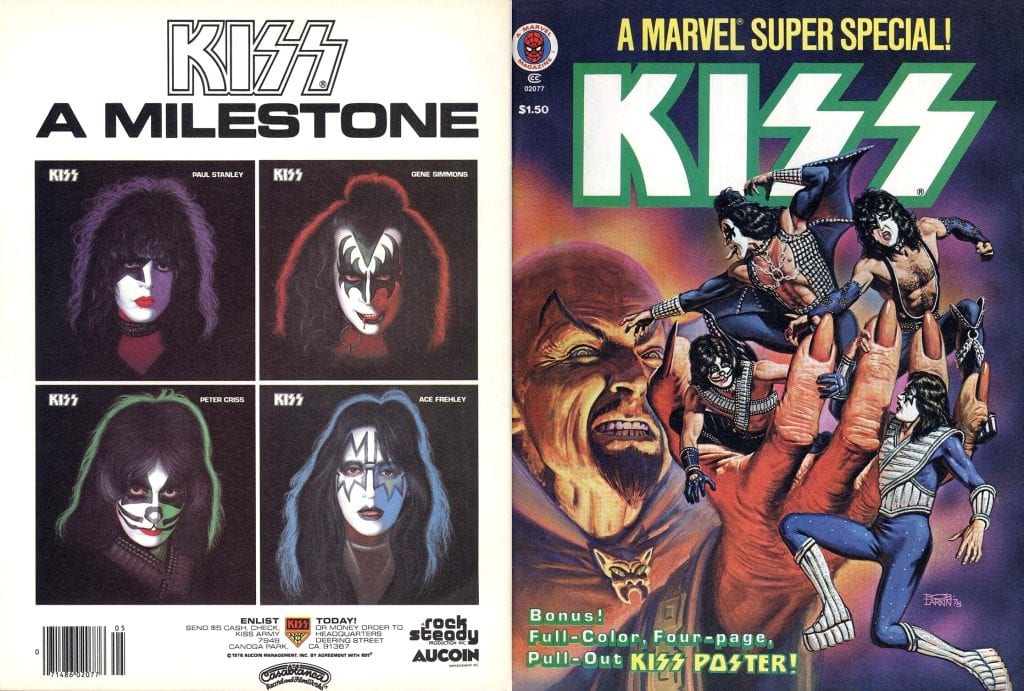
On 18. September, 1978, Kiss released four solo albums, one by each member.
In 1978, the world saw one of the most extravagant album launch campaigns ever: the simultaneous release of solo albums by all four members of Kiss.
Kiss has claimed that the solo albums were intended to ease rising tensions within the band, also their 1976 record contract did in fact call for four solo records, each of them counting as half an album toward the group’s five-record commitment. Each album was a solo effort (none of the group appeared on another’s album), however all were released and marketed as Kiss albums (with similar cover art and poster inserts). It was the first time that all current members of a rock band had released solo albums on the same day.
Kenny Kerner:
“RS: You’ve said on many occasions–and incidentally, I just spoke to Ace recently and he said the same thing–that the band really lost everything when those four solo albums came out. You want to explain why you feel that way.
PC: I agree 100 percent, because I feel we were a band and we had four talented guys, and just because I wrote a song and it was a big hit, that doesn’t mean shit. I think the four albums put us in competition with each other, which I never wanted to get into. It’s okay against another band, let’s blow their fuckin’ asses offstage, but not against one another, man. It got that heavy. It got to the point where I said, I’m going to be the best of the albums and I’m going to show everybody in the world that I’m the better musician. Ace, same thought. Paul, every one of us had these thoughts. I think that was bad. I think that if we would have just saved all that talent and just put a little on each album we did, we would have gotten it out eventually and maybe it would have been a little better.
RS: If you would have taken the two best cuts from each album, you would have had a great KISS album.
PC: Absolutely. And I think and I truly believe that that was the cancer that fuckin’ broke this band up. That was the start of the cancer. I agree with Ace 100 percent. That’s what broke us up. Because by then we were away from one another, we were totally apart.”
– “Peter Criss’ life after KISS: A Rock Horror Story about sex, drugs and blackmail!” by Kenny Kerner.

It was a chance to showcase their individual musical styles and tastes outside of Kiss, and in some cases to collaborate with contemporary artists. Stanley’s and Frehley’s albums were most similar to Kiss’ hard rock style, while Criss’ album featured an R&B style with multiple ballads. Simmons’ was the most diverse of the four, featuring hard rock, ballads, Beatles-influenced pop and a cover version of “When You Wish Upon a Star” from the Disney film Pinocchio.
Despite the large shipments, none of the albums sold particularly well and were later sold as cut-outs. Of the four, Simmons’s album charted the highest in the U.S., peaking at #22, while Frehley’s spawned the only resulting Top Forty hit single, a cover of “New York Groove”. Frehley’s album has gone on to be the biggest seller since the introduction of Soundscan in 1991.
Studios: (Ace) The Mansion (Connecticut) and Plaza Sound Studios (New York); (Paul) Electric Lady and The Record Plant, (New York) and The Village Recorder, (LA); (Peter) Electric Lady Studios, (New York) and Burbank Studios (California) and Sunset Sound (Hollywood); (Gene) The Manor (Oxfordshire), Cherokee (Hollywood) and Blue Rock (New York).
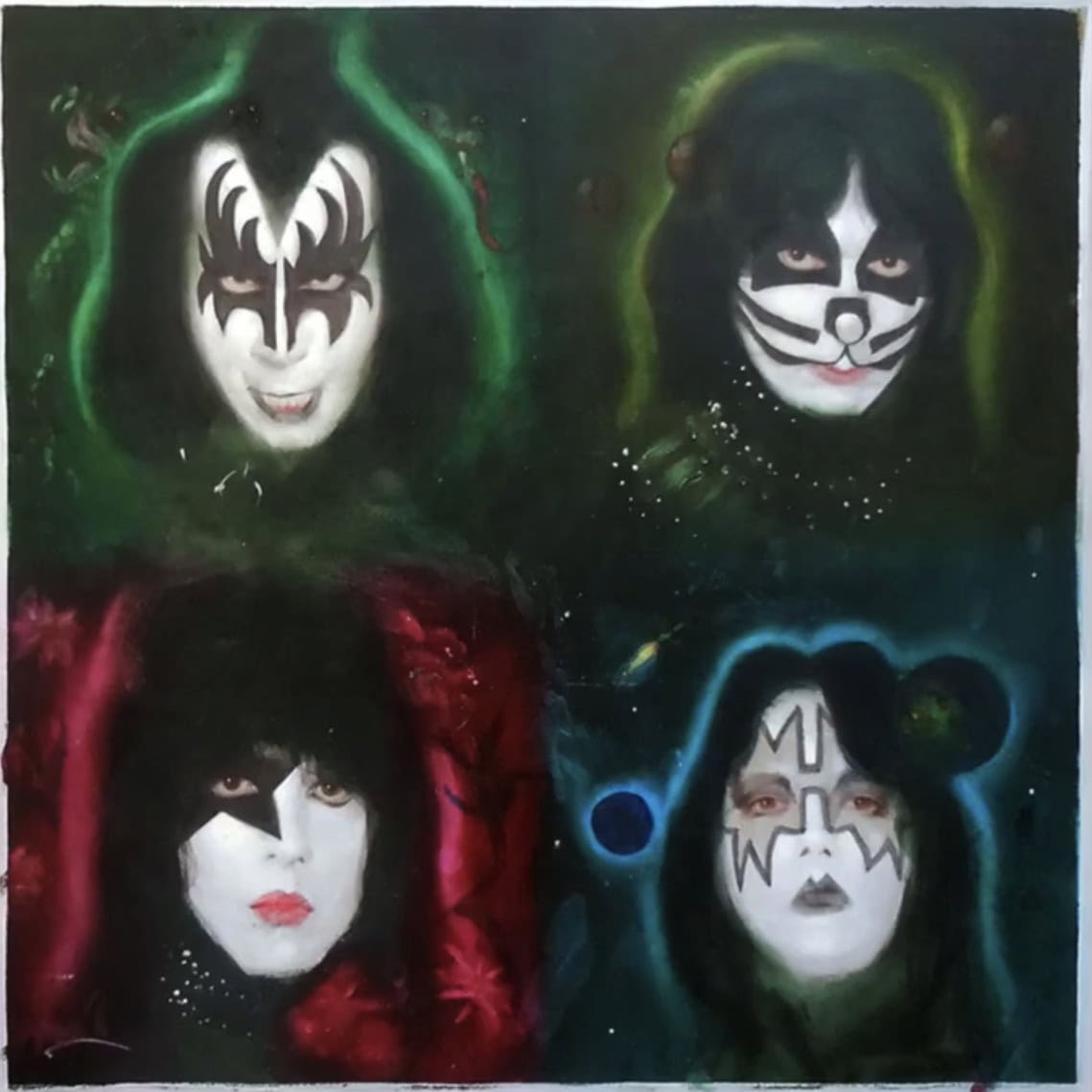
Kiss solo albums sketch by Daniel Mafia.
Art director Dennis Woloch:
The story I always tell about Eraldo (Carugati, cover painter) is Gene didn’t always have the dribble of blood when he first brought it in. Now, I’ll be perfectly honest, I don’t remember who or how that suggestion came out, that Gene needed a little something extra. Maybe it was Bill Aucoin, who was standing there looking at them. I don’t think it was me, but it was a long time ago (laughs). [Someone] said, “Well, Gene needs a little something extra. He spits blood onstage.” And so Eraldo actually had, in his pocket, a little piece of cardboard. It was a palette where he had dried up globs of paint on it. You know, they were dry. They come alive when you add water. And he had a tiny skinny brush in his pocket. And Eraldo always wore a jacket and a tie. He was a real gentleman. Even when he worked, I think he just rolled up his sleeves, and he had a tie on. Old-school, very European in a way. And he takes out the brush and he said, “Can I have a little water?” We gave him a little thing full of water and he dips it in. He had some red on the palette, he brought that back to life with the water. And he just starts painting right on the painting. I mean, he doesn’t do like a little pencil outline. Oh my God. I’m walking away, looking out the window. I’m saying, “Oh, fuck me. He’s going to screw it up now.” And I kept walking back and taking a peek at it. And like a magician, out of nowhere, boom, this beautiful little drop of blood with the shadow and the highlight on it. I said, “Oh, man. This is too good.”
– Kissconcerthistory.com
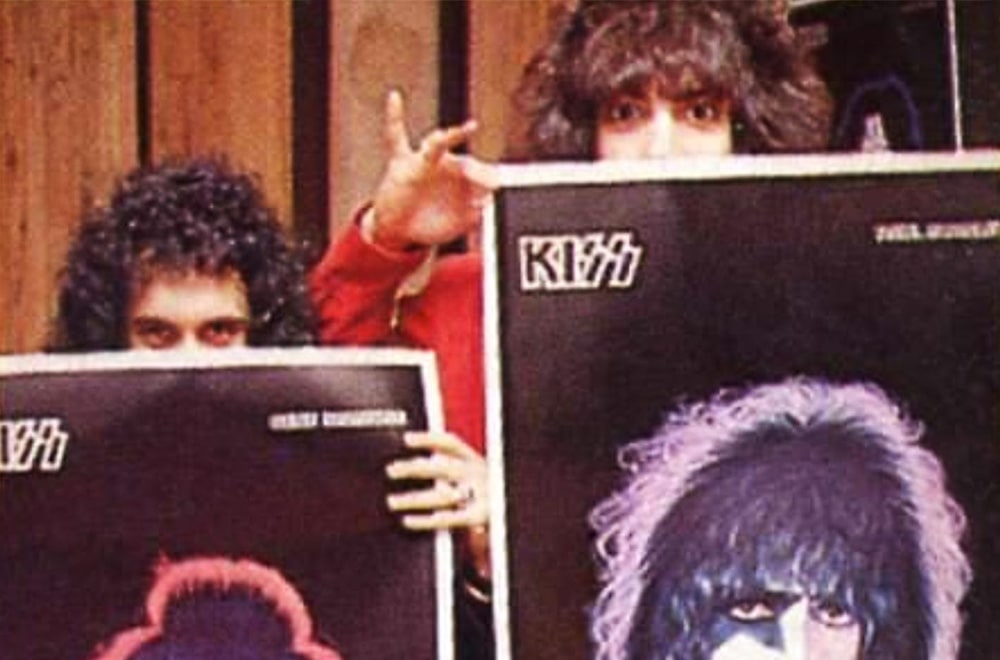
The posters artwork by Eraldo Carugati
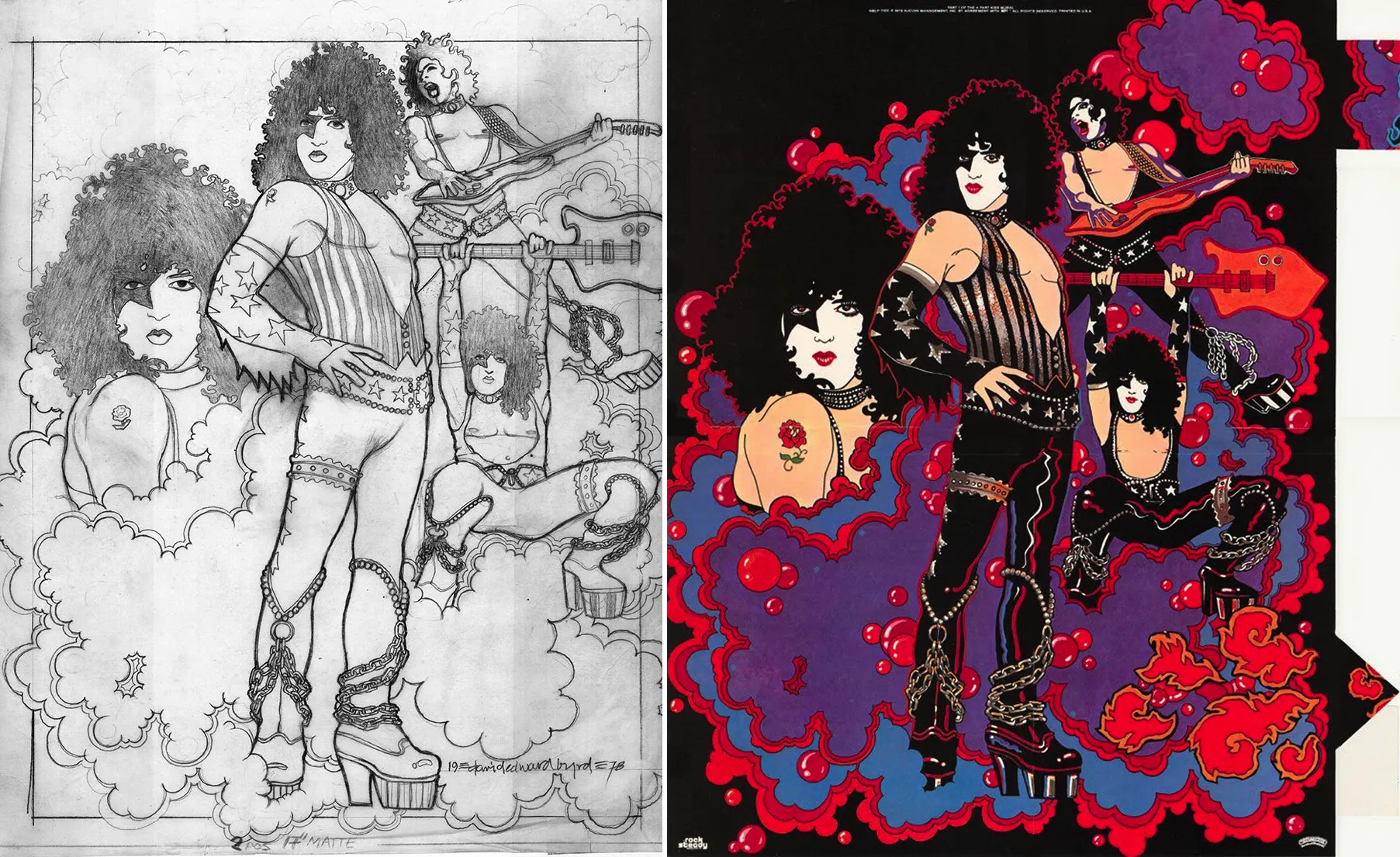
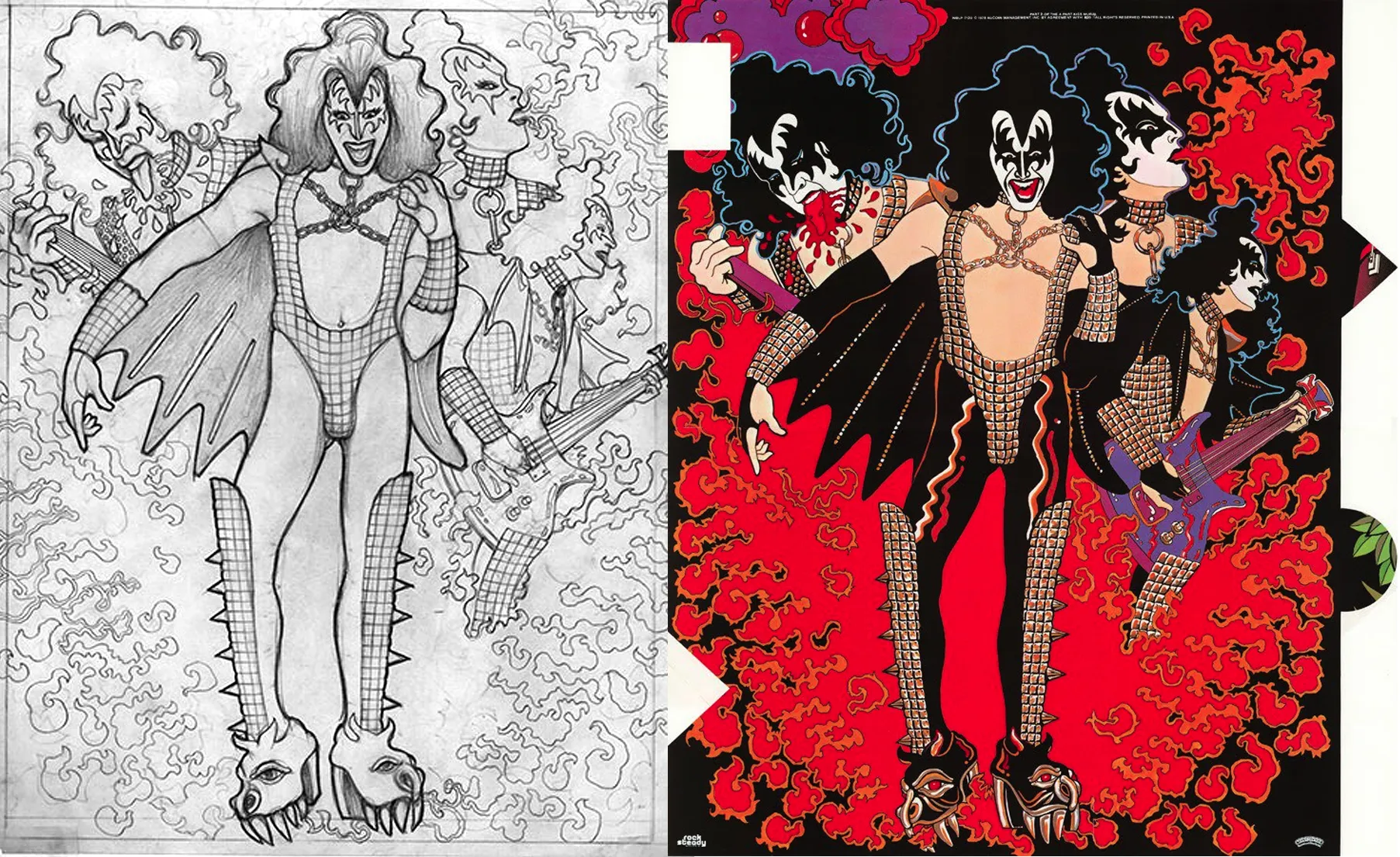
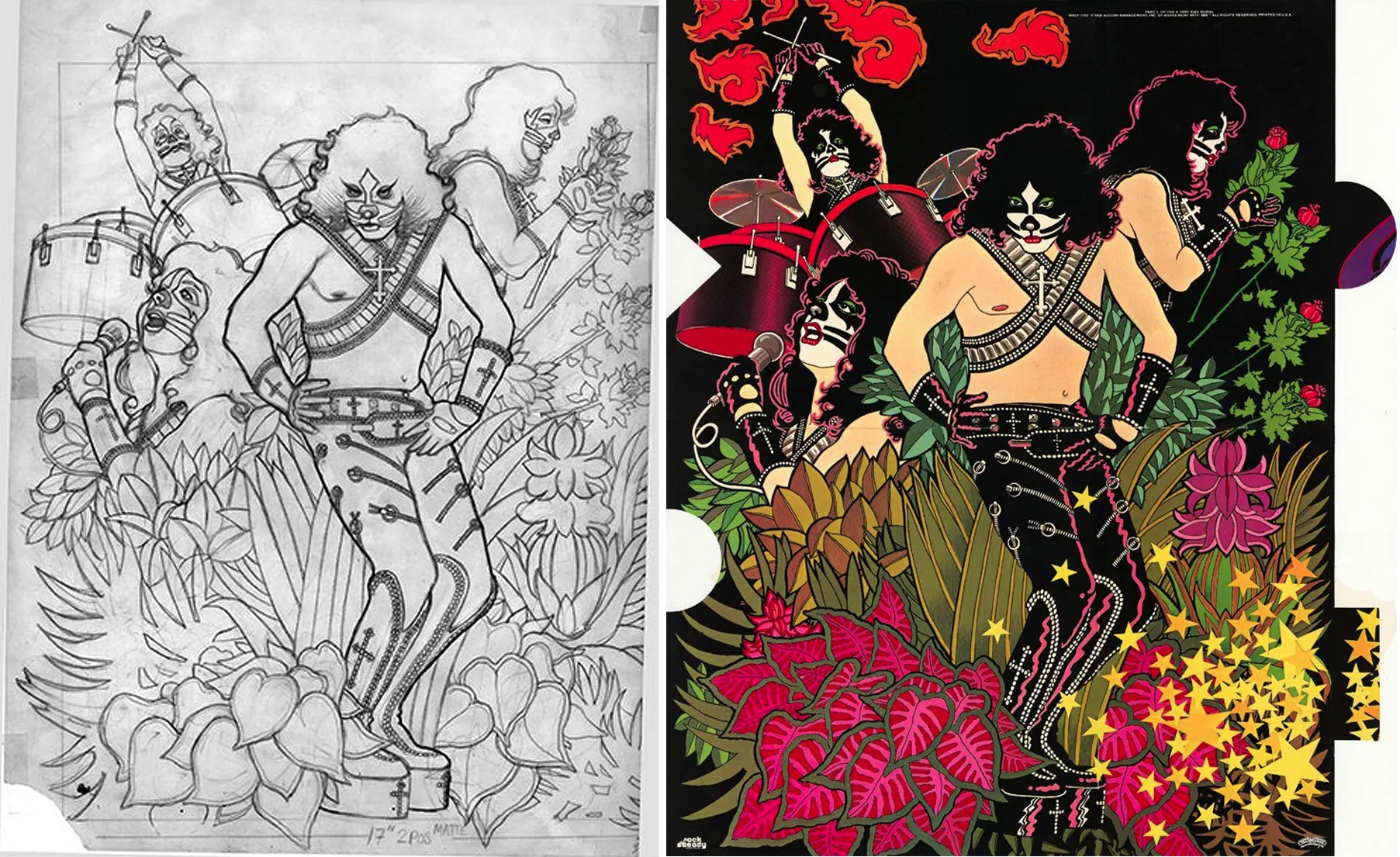
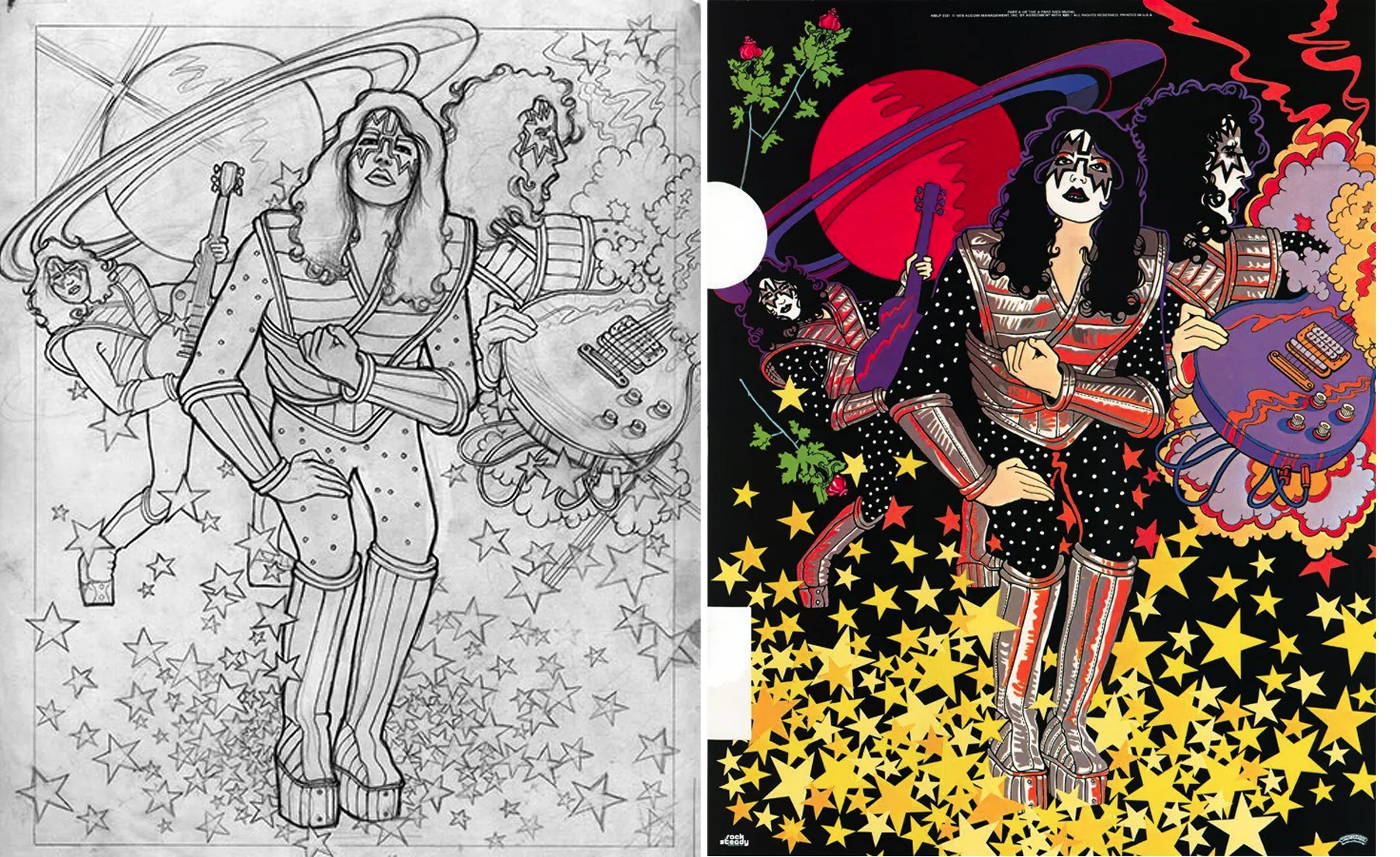
Artist David Edward Byrd said he got the KISS solo album mural job because he was already famous for his psychedelic concert posters and Broadway artwork. Kiss management hired him to create four separate posters—one for each band member—that would connect into one giant mural. Byrd said he was paid about $25,000 for the assignment, which he described as a rushed and “hellacious” project.
Because the deadline was so extreme—they reportedly called him on a Friday and needed the finished murals by Monday—Byrd brought in two of his students from the School of Visual Arts to help: Arthur K. Miller and another student named Rita. Byrd said he paid the students $10 an hour while the three of them worked around the clock to finish the huge interconnected acrylic paintings.
He first created rough sketches to plan how the four posters would connect visually, then the team used painted montages, cut-paper techniques, and layered acrylic painting to complete the murals under the impossible schedule. Byrd treated the work more like fine art than commercial illustration, and the finished mural became one of the most iconic visual pieces associated with KISS’s 1978 solo albums.
Read more at Kissfaq.
Related Kiss posts:
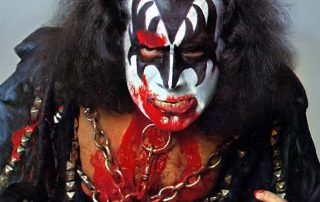 Gene Simmons, Peter Criss and Ace Frehley does solo photo sessions
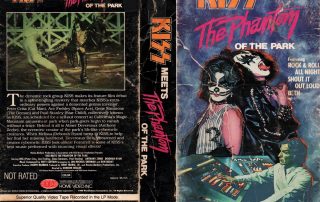 Kiss airs their film “Kiss Meets the Phantom of the Park”
 Kiss releases the compilation 3LP box set “The Originals II” in Japan
 Kiss releases their first greatest hits album “Double Platinum”
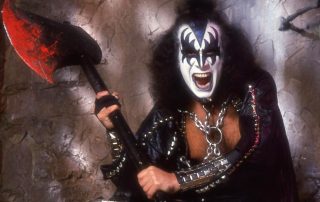 Gene Simmons does three solo photo sessions
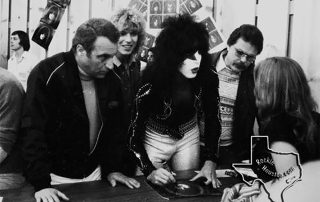 Paul Stanley in-store appearance at Cactus Records
On 18. September, 1978, Kiss released four solo albums, one by each member.
In 1978, the world saw one of the most extravagant album launch campaigns ever: the simultaneous release of solo albums by all four members of Kiss.
Kiss has claimed that the solo albums were intended to ease rising tensions within the band, also their 1976 record contract did in fact call for four solo records, each of them counting as half an album toward the group’s five-record commitment. Each album was a solo effort (none of the group appeared on another’s album), however all were released and marketed as Kiss albums (with similar cover art and poster inserts). It was the first time that all current members of a rock band had released solo albums on the same day.
Kenny Kerner:
“RS: You’ve said on many occasions–and incidentally, I just spoke to Ace recently and he said the same thing–that the band really lost everything when those four solo albums came out. You want to explain why you feel that way.
PC: I agree 100 percent, because I feel we were a band and we had four talented guys, and just because I wrote a song and it was a big hit, that doesn’t mean shit. I think the four albums put us in competition with each other, which I never wanted to get into. It’s okay against another band, let’s blow their fuckin’ asses offstage, but not against one another, man. It got that heavy. It got to the point where I said, I’m going to be the best of the albums and I’m going to show everybody in the world that I’m the better musician. Ace, same thought. Paul, every one of us had these thoughts. I think that was bad. I think that if we would have just saved all that talent and just put a little on each album we did, we would have gotten it out eventually and maybe it would have been a little better.
RS: If you would have taken the two best cuts from each album, you would have had a great KISS album.
PC: Absolutely. And I think and I truly believe that that was the cancer that fuckin’ broke this band up. That was the start of the cancer. I agree with Ace 100 percent. That’s what broke us up. Because by then we were away from one another, we were totally apart.”
– “Peter Criss’ life after KISS: A Rock Horror Story about sex, drugs and blackmail!” by Kenny Kerner.
It was a chance to showcase their individual musical styles and tastes outside of Kiss, and in some cases to collaborate with contemporary artists. Stanley’s and Frehley’s albums were most similar to Kiss’ hard rock style, while Criss’ album featured an R&B style with multiple ballads. Simmons’ was the most diverse of the four, featuring hard rock, ballads, Beatles-influenced pop and a cover version of “When You Wish Upon a Star” from the Disney film Pinocchio.
Despite the large shipments, none of the albums sold particularly well and were later sold as cut-outs. Of the four, Simmons’s album charted the highest in the U.S., peaking at #22, while Frehley’s spawned the only resulting Top Forty hit single, a cover of “New York Groove”. Frehley’s album has gone on to be the biggest seller since the introduction of Soundscan in 1991.
Studios: (Ace) The Mansion (Connecticut) and Plaza Sound Studios (New York); (Paul) Electric Lady and The Record Plant, (New York) and The Village Recorder, (LA); (Peter) Electric Lady Studios, (New York) and Burbank Studios (California) and Sunset Sound (Hollywood); (Gene) The Manor (Oxfordshire), Cherokee (Hollywood) and Blue Rock (New York).
Kiss solo albums sketch by Daniel Mafia.
Art director Dennis Woloch:
The story I always tell about Eraldo (Carugati, cover painter) is Gene didn’t always have the dribble of blood when he first brought it in. Now, I’ll be perfectly honest, I don’t remember who or how that suggestion came out, that Gene needed a little something extra. Maybe it was Bill Aucoin, who was standing there looking at them. I don’t think it was me, but it was a long time ago (laughs). [Someone] said, “Well, Gene needs a little something extra. He spits blood onstage.” And so Eraldo actually had, in his pocket, a little piece of cardboard. It was a palette where he had dried up globs of paint on it. You know, they were dry. They come alive when you add water. And he had a tiny skinny brush in his pocket. And Eraldo always wore a jacket and a tie. He was a real gentleman. Even when he worked, I think he just rolled up his sleeves, and he had a tie on. Old-school, very European in a way. And he takes out the brush and he said, “Can I have a little water?” We gave him a little thing full of water and he dips it in. He had some red on the palette, he brought that back to life with the water. And he just starts painting right on the painting. I mean, he doesn’t do like a little pencil outline. Oh my God. I’m walking away, looking out the window. I’m saying, “Oh, fuck me. He’s going to screw it up now.” And I kept walking back and taking a peek at it. And like a magician, out of nowhere, boom, this beautiful little drop of blood with the shadow and the highlight on it. I said, “Oh, man. This is too good.”
– Kissconcerthistory.com
The posters artwork by Eraldo Carugati
Artist David Edward Byrd said he got the KISS solo album mural job because he was already famous for his psychedelic concert posters and Broadway artwork. Kiss management hired him to create four separate posters—one for each band member—that would connect into one giant mural. Byrd said he was paid about $25,000 for the assignment, which he described as a rushed and “hellacious” project.
Because the deadline was so extreme—they reportedly called him on a Friday and needed the finished murals by Monday—Byrd brought in two of his students from the School of Visual Arts to help: Arthur K. Miller and another student named Rita. Byrd said he paid the students $10 an hour while the three of them worked around the clock to finish the huge interconnected acrylic paintings.
He first created rough sketches to plan how the four posters would connect visually, then the team used painted montages, cut-paper techniques, and layered acrylic painting to complete the murals under the impossible schedule. Byrd treated the work more like fine art than commercial illustration, and the finished mural became one of the most iconic visual pieces associated with KISS’s 1978 solo albums.
Read more at Kissfaq.
Related Kiss posts:
Gene Simmons, Peter Criss and Ace Frehley does solo photo sessions
Kiss airs their film “Kiss Meets the Phantom of the Park”
Kiss releases the compilation 3LP box set “The Originals II” in Japan
Kiss releases their first greatest hits album “Double Platinum”
Gene Simmons does three solo photo sessions
Paul Stanley in-store appearance at Cactus Records