
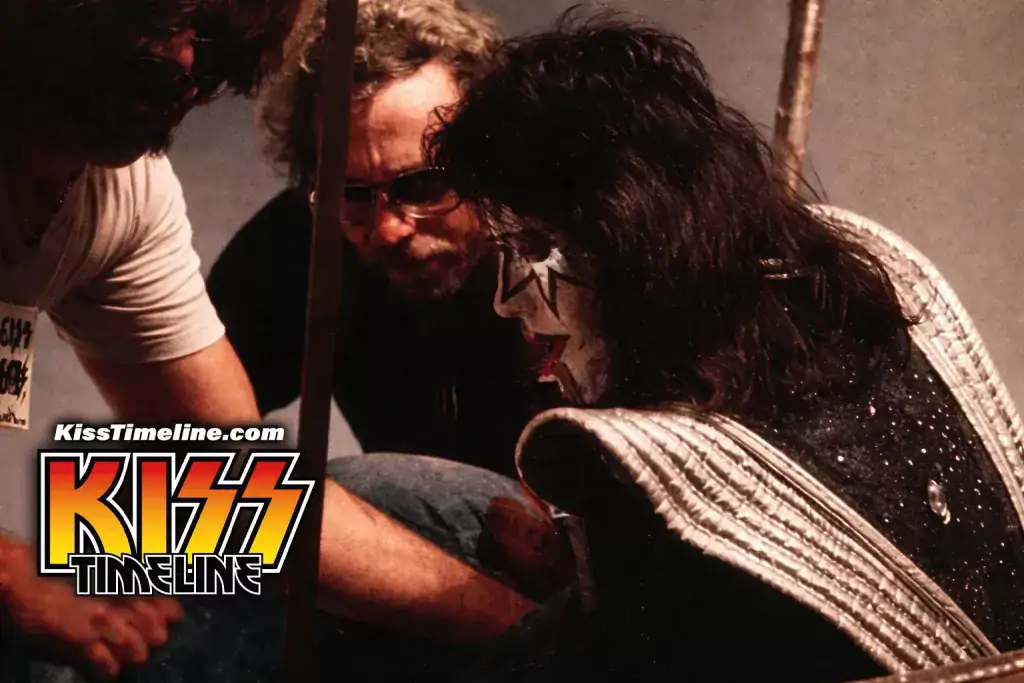

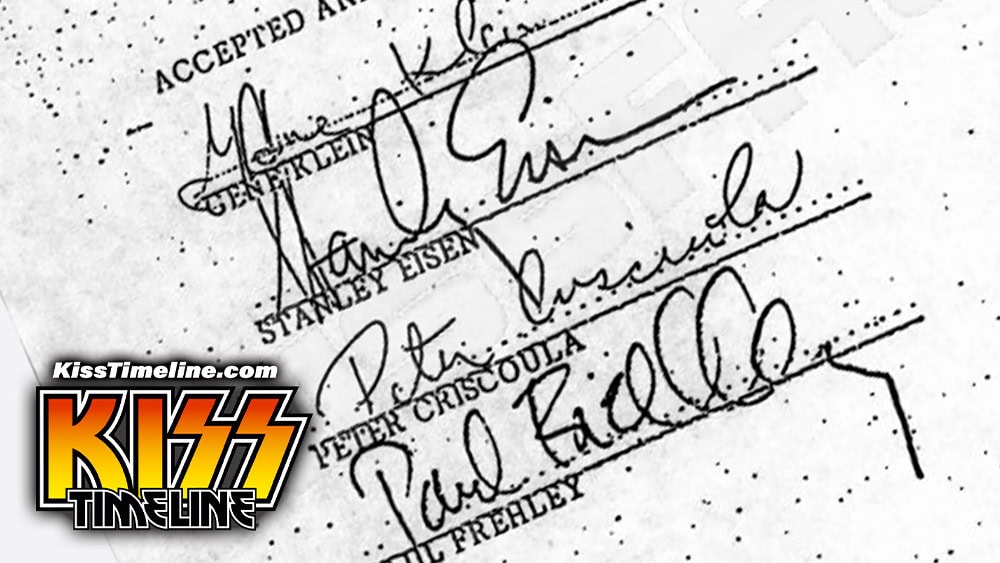
On 1. January, 1977, Kiss signed a renegotiated contract with Casablanca after Glickman/Marks Management Corporation, namely Carl D. Glickman and Howard L. Marks, formally became Kiss’s business managers in May 1976, and were granted control on behalf of the group, investments and banking, insurance, record keeping, and business operating transactions.
Kissfaq.com:
The contract with Casablanca was the most pressing item, though it would remain under negotiation before the new agreement was signed Jan. 1, 1977. The first section of the June 21 memo suggests G/M wanted a five-year deal. The term of the 1975 contract had been 1 year, with three additional one-year options following the conclusion of the initial period. The group agreed to deliver 2 albums comprised of 25-50 minutes of studio recordings during the initial period, with two albums per first two option years, and one album in the final option year, thus a four-year, seven album deal. The 1977 contract was for 30 months with a single 30-month option, giving the group at least half the period of security they were looking for (more so in a sense, considering the solo album definition). The group agreed to deliver 5 studio albums of the same length as the 1975 agreement during the initial period. The agreement was also in line with the two albums per year they wanted, but Casablanca scotched the idea that the number could include live releases. The label also explicitly defined the release of any compilation, should Kiss miss defined delivery dates. Where G/M wanted a $250,000 signing bonus and non-refundable advances of $1,000,000 and rising from the first year, Casablanca instead agreed to $500,000 advance per album payable via $15,000 weekly payments. Either way, it was a staggering increase on the $15,000 per album for the first two releases under the 1975 contract.
– Read more at https://www.kissfaq.com/
Related Kiss posts:
 Paul Stanley and Gene Simmons does a photo session for Bravo magazine
 Kiss appears in the comic book Howard The Duck #13
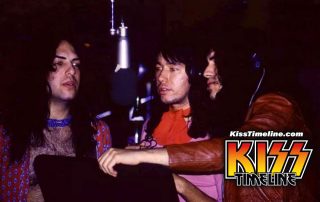 Kiss enters Bell Sound Studios to record their debut album
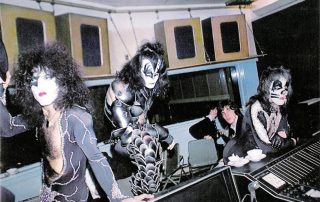 Kiss enters Electric Lady Studios to start recording “Destroyer”
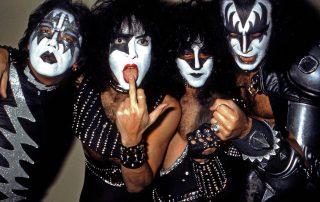 Kiss does a photo session at the Sonesta Hotel, The Netherlands
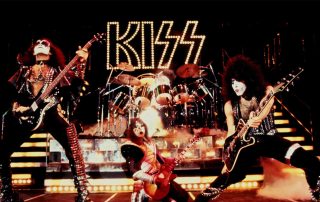 Kiss does the legendary “Alive II” photo session
On 1. January, 1977, Kiss signed a renegotiated contract with Casablanca after Glickman/Marks Management Corporation, namely Carl D. Glickman and Howard L. Marks, formally became Kiss’s business managers in May 1976, and were granted control on behalf of the group, investments and banking, insurance, record keeping, and business operating transactions.
Kissfaq.com:
The contract with Casablanca was the most pressing item, though it would remain under negotiation before the new agreement was signed Jan. 1, 1977. The first section of the June 21 memo suggests G/M wanted a five-year deal. The term of the 1975 contract had been 1 year, with three additional one-year options following the conclusion of the initial period. The group agreed to deliver 2 albums comprised of 25-50 minutes of studio recordings during the initial period, with two albums per first two option years, and one album in the final option year, thus a four-year, seven album deal. The 1977 contract was for 30 months with a single 30-month option, giving the group at least half the period of security they were looking for (more so in a sense, considering the solo album definition). The group agreed to deliver 5 studio albums of the same length as the 1975 agreement during the initial period. The agreement was also in line with the two albums per year they wanted, but Casablanca scotched the idea that the number could include live releases. The label also explicitly defined the release of any compilation, should Kiss miss defined delivery dates. Where G/M wanted a $250,000 signing bonus and non-refundable advances of $1,000,000 and rising from the first year, Casablanca instead agreed to $500,000 advance per album payable via $15,000 weekly payments. Either way, it was a staggering increase on the $15,000 per album for the first two releases under the 1975 contract.
– Read more at https://www.kissfaq.com/
Related Kiss posts:
Paul Stanley and Gene Simmons does a photo session for Bravo magazine
Kiss appears in the comic book Howard The Duck #13
Kiss enters Bell Sound Studios to record their debut album
Kiss enters Electric Lady Studios to start recording “Destroyer”
Kiss does a photo session at the Sonesta Hotel, The Netherlands
Kiss does the legendary “Alive II” photo session