
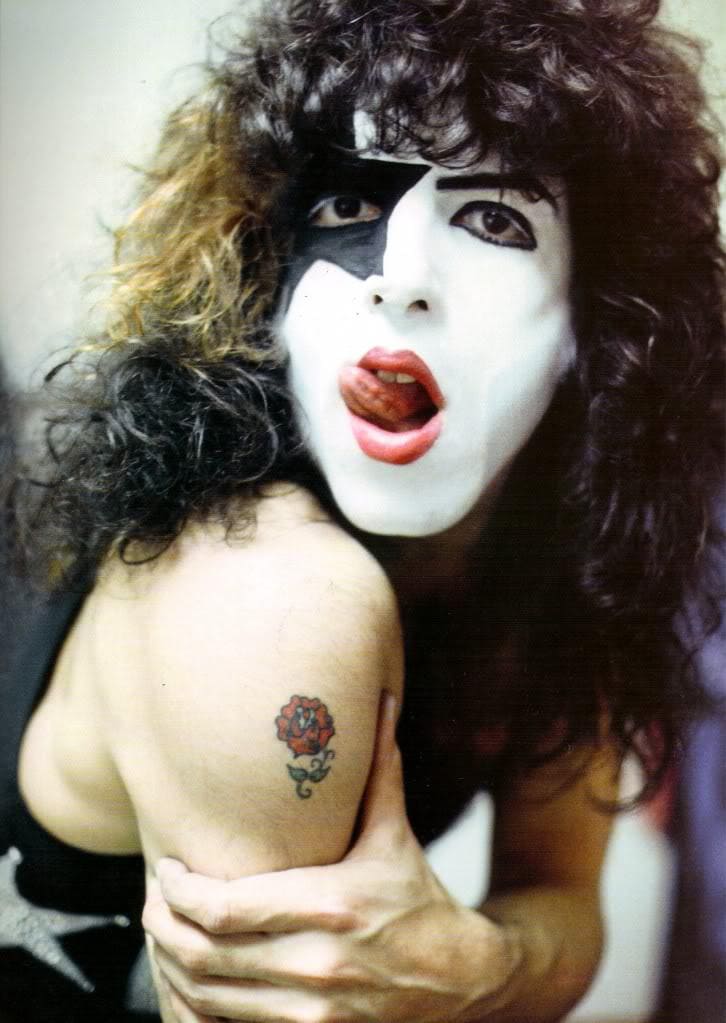
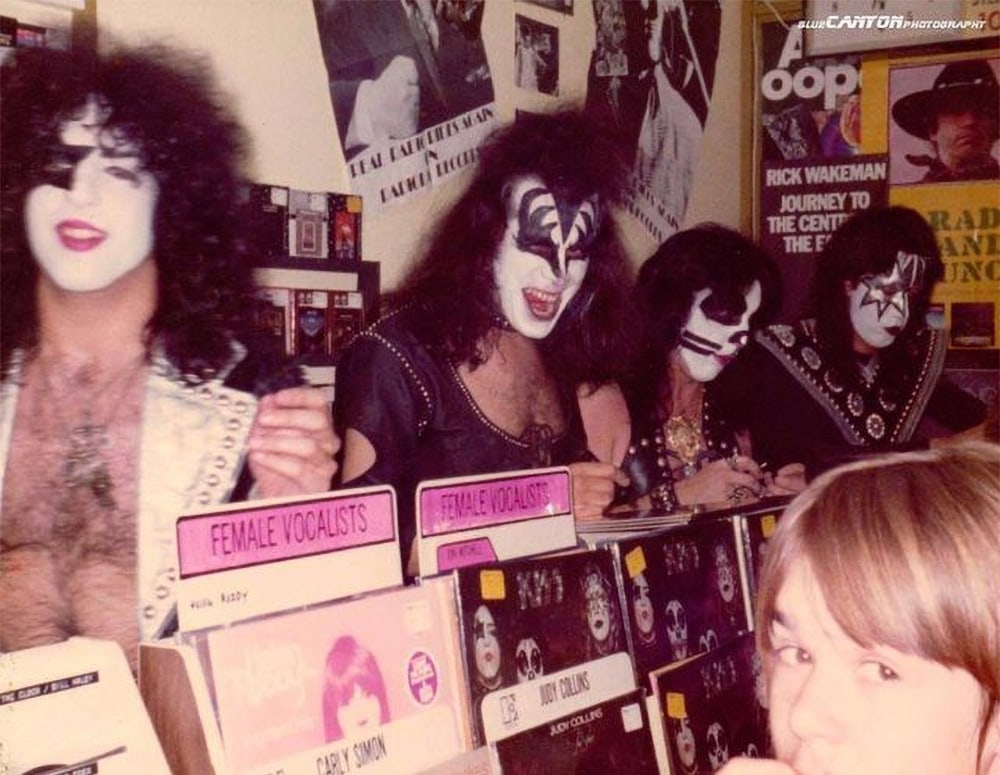
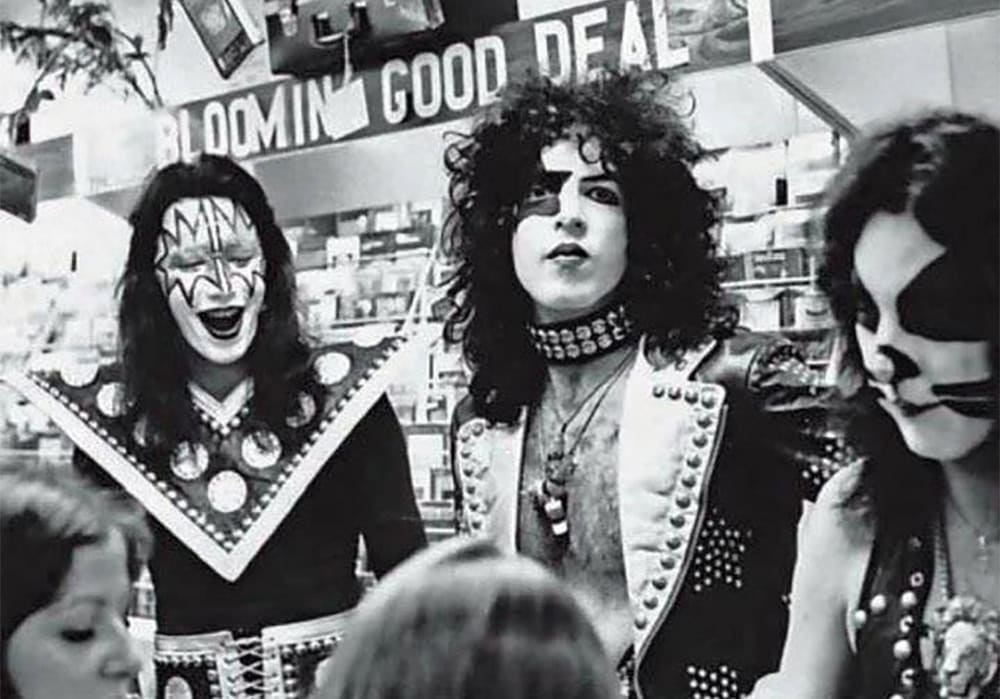
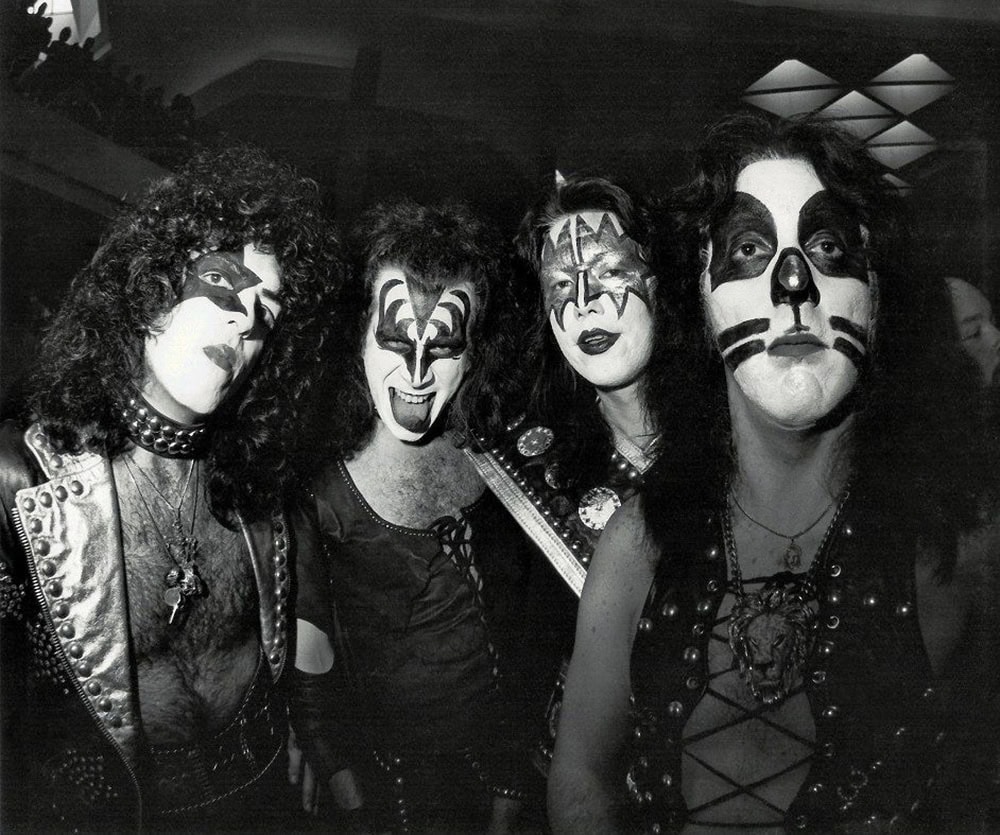
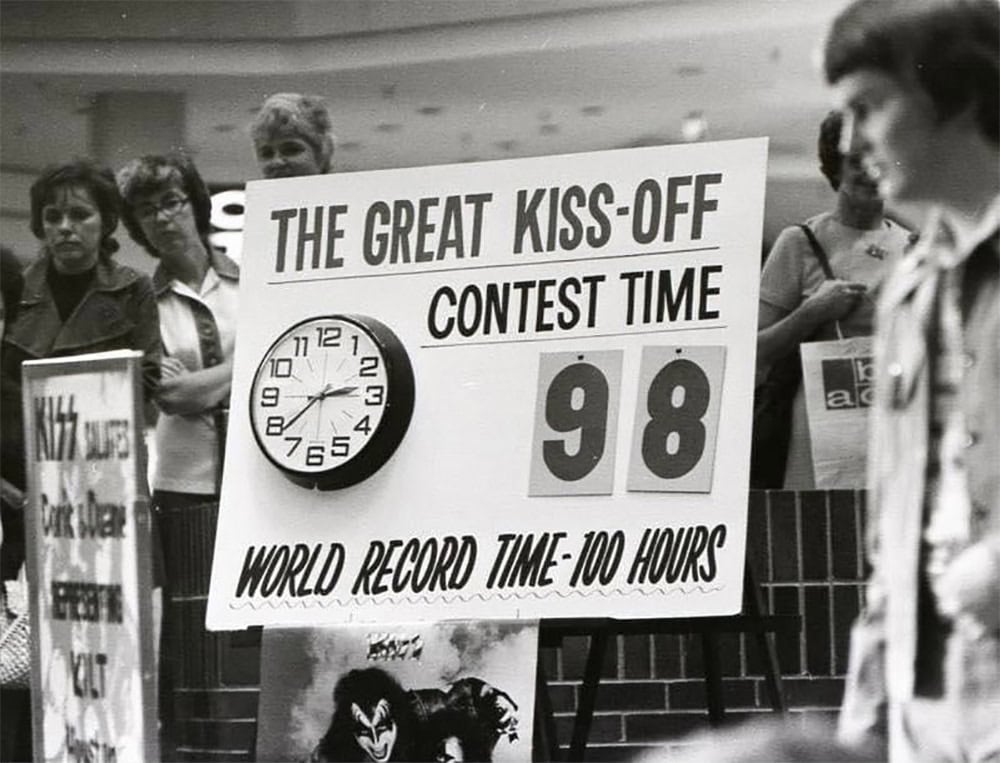
On 8. June, 1974, Kiss attended the “National Kiss-Off” kissing contest finals at Woodfield Shopping Center in Schaumburg, Illinois, which were sponsored by Casablanca Records. The band had recorded a reworked cover of the song “Kissin’ Time” which was released as a single 10. May, 1974, and added as the first song on side B on the second pressing of their debut album.
The contest began at noon, with 11 couples from across the country competing. These couples had already participated in a preliminary round for radio stations near their homes and were ready to win the big prize. At stake was an eight-day cruise to Acapulco and a place in the Guinness Book of World Records.
Over the course of days, couples began to drop out from a combination of exhaustion and feeling physically ill.
Even falling asleep wasn’t necessarily a disqualifier, though, as long as couples could find a way to do so without their lips parting. Jeff and Sherry Moore of Charlotte, North Carolina, strapped their heads together with a pink plastic belt while they slept, according to the Daily Herald article of Monday, June 10.
The couple that outlasted 10 others from across the nation were Louise Heath and Vinnie Toro of Ft. Lauderdale, Florida, where the coast-to-coast radio promotions leading up to the Schaumburg finale began.
Each couple was given a five-minute break every hour. They were also incentivized with a big kickoff for the event led by WCFL’s superjock, Larry Lujack.
The nationwide contest began as a fundraiser for St. Jude’s Children’s Research Hospital in Memphis, Tennessee. In the end, about $5,000 was raised for the hospital.
Paul Stanley:
“We show up for the event in all our gear and traipse down through the mall to this store where they’re holding “The Great KISS-Off” finals. We’re walking around thinking we own the place. “Aren’t we amazing, aren’t we the shit? This is all for us.” I walked over to this couple and they had to keep their lips locked. They looked over with their eyes to the side and through pursed lips said, “Who are you?” (Laughs).”
– “Nothin’ to lose: The making of KISS (1972-1975)” by Ken Sharp
Larry Harris
“As soon I said goodbye to Eddie, I called Neil. By the next morning, he had a plan. We would arrange for radio stations throughout the country to compete in a huge national Kiss-Off. Eddie had not been the only one to notice the success of the WSHE contest. Scott Shannon, a DJ at WMAK in Nashville, had the inspired idea for KISS to record a cover of Bobby Rydell’s “Kissin’ Time” as part of the promotion. Neil loved it. KISS hated the thought, however. They and their producers, Kenny Kerner and Richie Wise, were dead set against it; they didn’t want to record a cover song when they were perfectly capable of writing their own material. Neil always tried to be positive-positive people were successful people, as far as he was concerned—but if he couldn’t get his way through ebullient enthusiasm, he had no problem rolling up his sleeves and wrestling you to the ground. After his cajoling had failed (and, I’ll admit, KISS doing Bobby Rydell struck me as pretty odd, but I wasn’t about to tell Neil that), he told them, “Look, either you record the song or we’ll pull our support for you.”
It was pure bluff. KISS was our first signing, and, frankly, they were the only thing we had going for us. Neil would never have purposefully killed their career. I knew this, but the one bit of leverage Neil had was that the KISS team was even greener than we were. And with the band’s outlandish appearance and their refusal to tone down their gimmick, they had to recognize that their chances of finding another record company that believed in them were limited. They caved. Neil won, but he didn’t want to fracture the relationship, so he softened his stance. “C’mon guys, the promotion will work great, and it’s just one song. As a concession, I promise that the song will only be a single, and not part of any future KISS album.” By April 26, KISS was back at Bell Sound Studios in Manhattan, cutting the track in one twelve-hour session. We rush released “Kissin’ Time” as a single and, in direct violation of Neil’s promise, we included it on all new pressings of KISS’s first album starting in June.
The series of kissing contests, which were collectively dubbed “The Great Kiss-Off,” began on May 10. The single’s lyrics contained the names of many cities around the country, and we used this to our advantage, matching those cities to radio markets: WAYS (Charlotte), WOKY (Milwaukee), WIXY (Cleveland), WSAJ (Cincinnati), WCFL (Chicago), KLIF (Dallas), WFIL (Philly), WQXI (Atlanta), WMAK (Nashville), KJR (Seattle), CKLW (Detroit), KILT (Houston), and WPIX (New York). The names of all these stations/markets, except for Houston and New York, were included in the reworked lyrics for the single. We ran a prominent ad in the May 18, 1974 issue of Billboard (which would have hit newsstands around May 7) to bring national industry attention to the events. The lyrics made radio airplay easier to come by, because radio stations loved to play songs that mentioned their city.
Here is how the event worked. First, the stations would have a kissing contest in their own markets. Then the local winners would compete for the national title. The publicity would be enormous, and it would go on for many weeks, because it spanned both the local contests and the final national event.
On June 8, the day of the National Kiss-Off, Neil, Buck, Joyce, and I went to Woodfield Mall (then the largest in the world) in Schaumburg, Illinois, just outside of Chicago. KISS came too, and they walked around the mall in full regalia. There was heavy local media coverage for the event, and many Chicago-area celebrities were on hand. Radio personality Larry Lujack was master of ceremonies. A stage had been erected in a large open area in the middle of the mall. Neil got up on the stage and started asking the crowd for donations to a local hospital charity. He was failing miserably—I don’t think he raised a single dollar. After an hour or so, he had Buck go up to the next level of the mall, stand at the railing where he could see the stage below, and wait for a cue. Again Neil addressed the respectably large crowd that had gathered on both levels, but this time he made it about the children: “C’mon folks, the children really need your money.” At that moment, Buck released a big stack of one-dollar bills into the air, and suddenly it was raining money. People on all parts of the upper level started throwing down ones and fives, and a few tens and twenties—hundreds of them. People on the lower level were picking up the bills, crumpling them, and throwing them toward the stage. It’s a miracle Neil didn’t incite a riot. Aside from performing these onstage fiduciary duties, Neil or I, using a bank of phones, reported every half hour to the participating radio stations on how their contestants were faring. The stations, in turn, aired the results, building excitement in each city. These were mostly Top 40 stations, as Neil wanted to use the outlets that had the highest ratings. Besides, few rock stations would participate in such an obviously commercial event. The national media, television and print, picked up the story, and the KissOff became one of the most successful KISS promotions ever, though the contestants seemed to garner more attention than the band.”
– “And party every day: The inside story of Casablanca Records” by Larry Alan harris
Photos by Joe Gino.
Related Kiss posts:
 Kiss signed assignment of copyrights agreement with Aucoin Management
 “Beth” wins the People’s Choice Award for Best Song of 1976
 Kiss releases their debut album “Kiss”
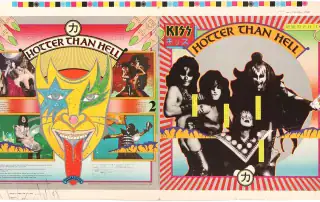 Kiss releases their second studio album “Hotter than Hell”
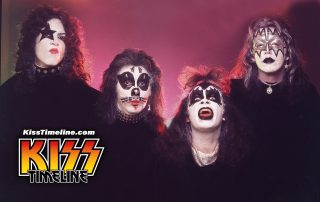 Kiss does the debut album photo session
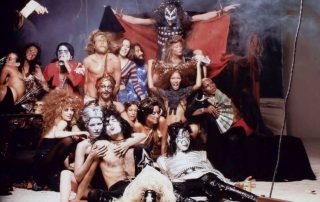 Kiss does the infamous “Hotter Than Hell” photo session
On 8. June, 1974, Kiss attended the “National Kiss-Off” kissing contest finals at Woodfield Shopping Center in Schaumburg, Illinois, which were sponsored by Casablanca Records. The band had recorded a reworked cover of the song “Kissin’ Time” which was released as a single 10. May, 1974, and added as the first song on side B on the second pressing of their debut album.
The contest began at noon, with 11 couples from across the country competing. These couples had already participated in a preliminary round for radio stations near their homes and were ready to win the big prize. At stake was an eight-day cruise to Acapulco and a place in the Guinness Book of World Records.
Over the course of days, couples began to drop out from a combination of exhaustion and feeling physically ill.
Even falling asleep wasn’t necessarily a disqualifier, though, as long as couples could find a way to do so without their lips parting. Jeff and Sherry Moore of Charlotte, North Carolina, strapped their heads together with a pink plastic belt while they slept, according to the Daily Herald article of Monday, June 10.
The couple that outlasted 10 others from across the nation were Louise Heath and Vinnie Toro of Ft. Lauderdale, Florida, where the coast-to-coast radio promotions leading up to the Schaumburg finale began.
Each couple was given a five-minute break every hour. They were also incentivized with a big kickoff for the event led by WCFL’s superjock, Larry Lujack.
The nationwide contest began as a fundraiser for St. Jude’s Children’s Research Hospital in Memphis, Tennessee. In the end, about $5,000 was raised for the hospital.
Paul Stanley:
“We show up for the event in all our gear and traipse down through the mall to this store where they’re holding “The Great KISS-Off” finals. We’re walking around thinking we own the place. “Aren’t we amazing, aren’t we the shit? This is all for us.” I walked over to this couple and they had to keep their lips locked. They looked over with their eyes to the side and through pursed lips said, “Who are you?” (Laughs).”
– “Nothin’ to lose: The making of KISS (1972-1975)” by Ken Sharp
Larry Harris
“As soon I said goodbye to Eddie, I called Neil. By the next morning, he had a plan. We would arrange for radio stations throughout the country to compete in a huge national Kiss-Off. Eddie had not been the only one to notice the success of the WSHE contest. Scott Shannon, a DJ at WMAK in Nashville, had the inspired idea for KISS to record a cover of Bobby Rydell’s “Kissin’ Time” as part of the promotion. Neil loved it. KISS hated the thought, however. They and their producers, Kenny Kerner and Richie Wise, were dead set against it; they didn’t want to record a cover song when they were perfectly capable of writing their own material. Neil always tried to be positive-positive people were successful people, as far as he was concerned—but if he couldn’t get his way through ebullient enthusiasm, he had no problem rolling up his sleeves and wrestling you to the ground. After his cajoling had failed (and, I’ll admit, KISS doing Bobby Rydell struck me as pretty odd, but I wasn’t about to tell Neil that), he told them, “Look, either you record the song or we’ll pull our support for you.”
It was pure bluff. KISS was our first signing, and, frankly, they were the only thing we had going for us. Neil would never have purposefully killed their career. I knew this, but the one bit of leverage Neil had was that the KISS team was even greener than we were. And with the band’s outlandish appearance and their refusal to tone down their gimmick, they had to recognize that their chances of finding another record company that believed in them were limited. They caved. Neil won, but he didn’t want to fracture the relationship, so he softened his stance. “C’mon guys, the promotion will work great, and it’s just one song. As a concession, I promise that the song will only be a single, and not part of any future KISS album.” By April 26, KISS was back at Bell Sound Studios in Manhattan, cutting the track in one twelve-hour session. We rush released “Kissin’ Time” as a single and, in direct violation of Neil’s promise, we included it on all new pressings of KISS’s first album starting in June.
The series of kissing contests, which were collectively dubbed “The Great Kiss-Off,” began on May 10. The single’s lyrics contained the names of many cities around the country, and we used this to our advantage, matching those cities to radio markets: WAYS (Charlotte), WOKY (Milwaukee), WIXY (Cleveland), WSAJ (Cincinnati), WCFL (Chicago), KLIF (Dallas), WFIL (Philly), WQXI (Atlanta), WMAK (Nashville), KJR (Seattle), CKLW (Detroit), KILT (Houston), and WPIX (New York). The names of all these stations/markets, except for Houston and New York, were included in the reworked lyrics for the single. We ran a prominent ad in the May 18, 1974 issue of Billboard (which would have hit newsstands around May 7) to bring national industry attention to the events. The lyrics made radio airplay easier to come by, because radio stations loved to play songs that mentioned their city.
Here is how the event worked. First, the stations would have a kissing contest in their own markets. Then the local winners would compete for the national title. The publicity would be enormous, and it would go on for many weeks, because it spanned both the local contests and the final national event.
On June 8, the day of the National Kiss-Off, Neil, Buck, Joyce, and I went to Woodfield Mall (then the largest in the world) in Schaumburg, Illinois, just outside of Chicago. KISS came too, and they walked around the mall in full regalia. There was heavy local media coverage for the event, and many Chicago-area celebrities were on hand. Radio personality Larry Lujack was master of ceremonies. A stage had been erected in a large open area in the middle of the mall. Neil got up on the stage and started asking the crowd for donations to a local hospital charity. He was failing miserably—I don’t think he raised a single dollar. After an hour or so, he had Buck go up to the next level of the mall, stand at the railing where he could see the stage below, and wait for a cue. Again Neil addressed the respectably large crowd that had gathered on both levels, but this time he made it about the children: “C’mon folks, the children really need your money.” At that moment, Buck released a big stack of one-dollar bills into the air, and suddenly it was raining money. People on all parts of the upper level started throwing down ones and fives, and a few tens and twenties—hundreds of them. People on the lower level were picking up the bills, crumpling them, and throwing them toward the stage. It’s a miracle Neil didn’t incite a riot. Aside from performing these onstage fiduciary duties, Neil or I, using a bank of phones, reported every half hour to the participating radio stations on how their contestants were faring. The stations, in turn, aired the results, building excitement in each city. These were mostly Top 40 stations, as Neil wanted to use the outlets that had the highest ratings. Besides, few rock stations would participate in such an obviously commercial event. The national media, television and print, picked up the story, and the KissOff became one of the most successful KISS promotions ever, though the contestants seemed to garner more attention than the band.”
– “And party every day: The inside story of Casablanca Records” by Larry Alan harris
Photos by Joe Gino.
Related Kiss posts:
Kiss signed assignment of copyrights agreement with Aucoin Management
“Beth” wins the People’s Choice Award for Best Song of 1976
Kiss releases their debut album “Kiss”
Kiss releases their second studio album “Hotter than Hell”
Kiss does the debut album photo session
Kiss does the infamous “Hotter Than Hell” photo session