
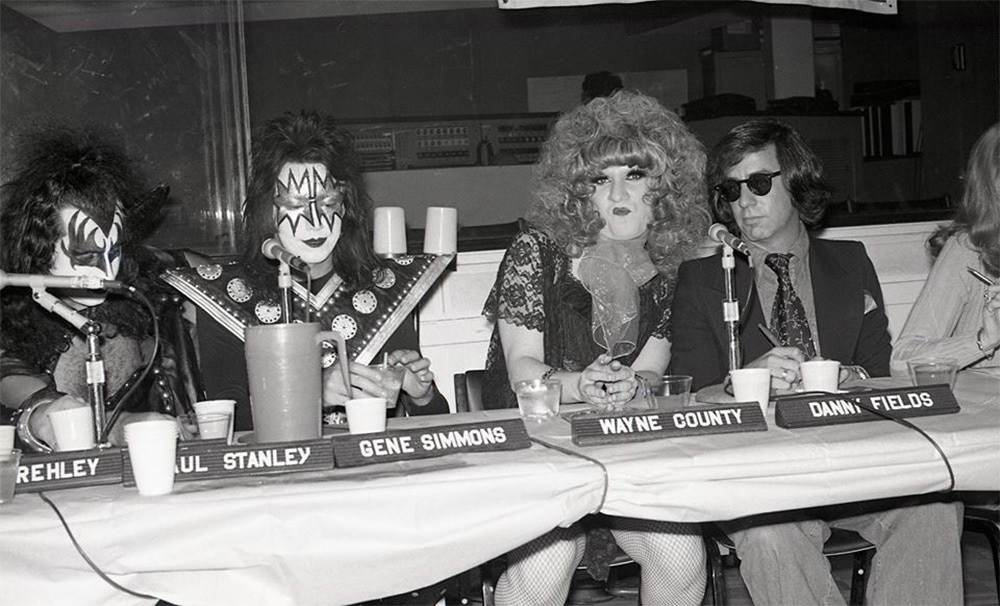
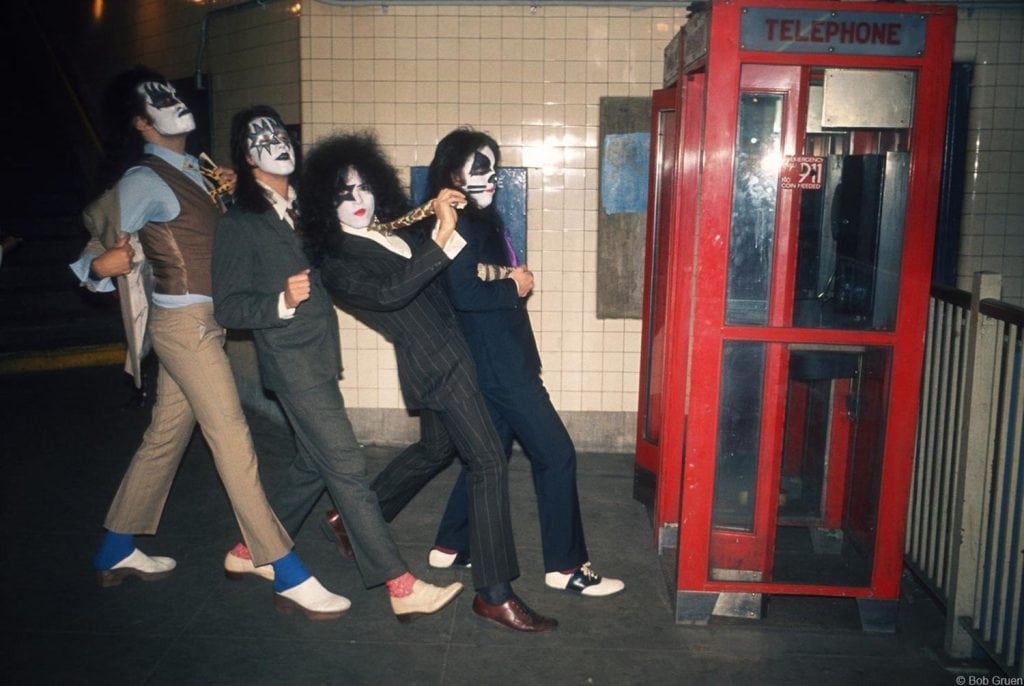
On 22. October, 1974, Kiss’ second album “Hotter than Hell” was released by Casablanca Records. It was certified gold on June 23, 1977, having shipped 500,000 copies. The album was re-released in 1997 in a remastered version. It peaked on the Billboard 200 charts at No. 100, without the benefit of a hit single. Many of the album’s songs are live staples for the band, including “Parasite”, “Hotter than Hell”, “Let Me Go, Rock ‘n’ Roll” and “Watchin’ You”.
The album was recorded at Village Recorder Studios in Santa Monica, Los Angeles, California, with producers Kenny Kerner and Richie Wise who had moved to California from New York.
Norman Zeef, photographer:
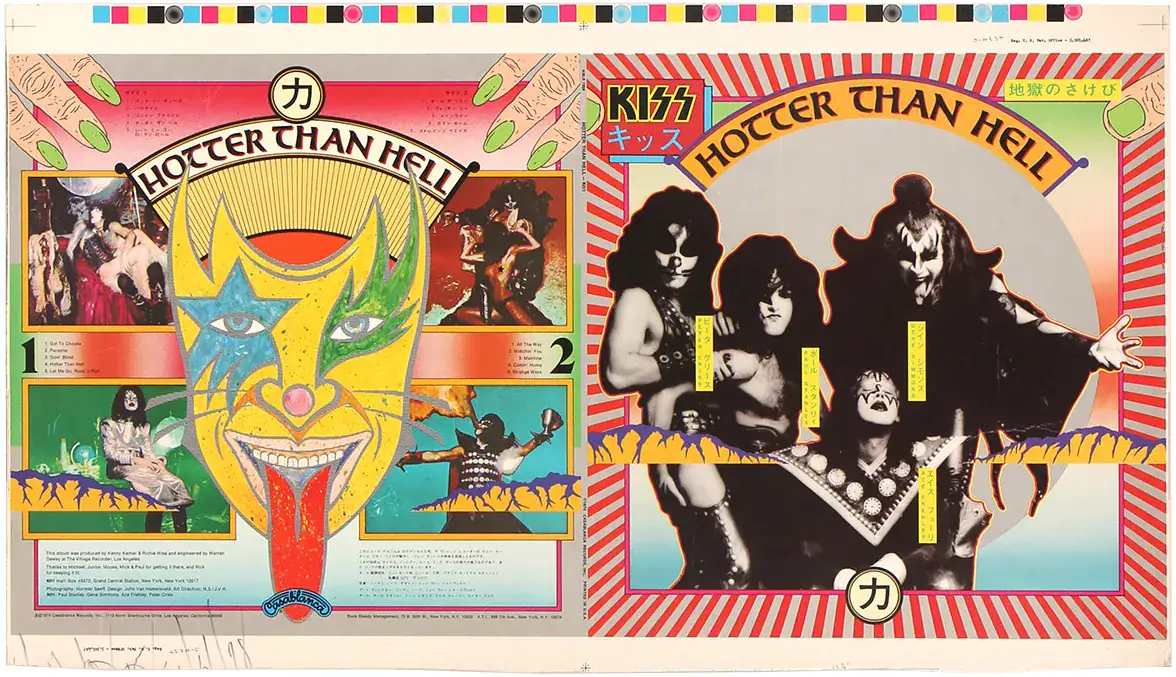
“The Hotter Than Hell photo shoot was done at the Raleigh stages in Hollywood. The front and back cover were shot on the same day. I had gone to Japan with my film crews and we published my book Hot Shots there. As part of my Japanese trip I was photographing and filming top Japanese groups. I also wanted to meet Japanese artists in different arenas. It was a whole ensemble of young Japanese art directors, photographers, and producers. One of the people they introduced me to was Tadanori Yokoo, a profoundly exciting Japanese artist. He was a guy who was pushing the envelope in Japan when Japan was still very conservative. Yokoo wasn’t a copyist; he took his imagery out of traditional Japanese art. I was very excited by what he was doing. He was a combination of Timothy Leary, Andy Warhol, and Picasso.”
– “Nothin’ to Lose: The making of Kiss (1972-1975)” by Ken Sharp, Gene Simmons, and Paul Stanley.
John Van Hamersveld, designer:
“In that period, I’d designed album covers for the Rolling Stones (Exile on Main Street), the Grateful Dead (Skeletons from the Closet), Bob Dylan (Pat Garrett & Billy the Kid), and Steve Miller (The Joker). The Norman Seeff photography studio was just down the street from Casablanca Records, on the Sunset Strip. Norman had been selling photos to Neil Bogart for artists like Donna Summer and Johnny Carson. Norman was the rock entertainment photographer at the time and everyone wanted his style of photograph. He called me at the Chapman Park Studio Building in LA where I was packaging album covers at that time. He explained he needed me to pull the package together for the band and Casablanca Records real quickly.”
– “Nothin’ to Lose: The making of Kiss (1972-1975)” by Ken Sharp, Gene Simmons, and Paul Stanley.
Paul Stanley:
“Hotter Than Hell was an amazing cover that really captured the band. It was the first thing I saw that truly reached beyond the American album covers typical of the time, which I thought were so boring. I was a huge fan of British albums and album art, and the cover of Hotter Than Hell really smacked more to me of [Cream’s] Disraeli Gears as opposed to Marshall Tucker. The Japanese writing was wild and came out of nowhere. The essence of that cover was so far-reaching it really blew me away.”
– “Nothin’ to Lose: The making of Kiss (1972-1975)” by Ken Sharp, Gene Simmons, and Paul Stanley.
Paul Stanley:
“I’d give Hotter Than Hell three stars. There’s some songs I really like. Hotter Than Hellwas the first album where we couldn’t rely on material we’d written in high school and forward. Although there were some leftover songs on the album from our club days, it really came down to writing a new batch of songs, which was daunting. We had years to sift through all our best material for the first album. For the second album it was instant rock. We hoped to remedy the sonic deficiencies we found in the first album. We were never as rock-‘n’-rolly or good-timey as we sounded on that album. We were much heavier live. So we tried to capture sonically how we sounded live. Unfortunately, the people that we were working with might not have been the right people to be doing it with. It was our first extended trip to Los Angeles. We were living the rock ‘n’ roll lifestyle of an up-and-coming band at the Ramada on Sunset. We were listening to Mott the Hoople, just hanging out, and having a cool time. The party that went into the photo session for that album kind of summed up what life was like in L.A. at that time.
“Hotter Than Hell” was a real cool tune that was very much influenced by Free, the whole idea of sparse playing and storytelling. It had that simplicity, a framework to sing over and certain chord voicings that Free used in “All Right Now.” Even thematically, “All Right Now” told the story of seeing a girl in the street and a guy trying to pick her up. “Hotter Than Hell” is about a guy seeing a girl and trying to pick her up and what she replies to him, which is basically the same thing that happens in “All Right Now.” The song didn’t have an end to it. It could have just gone out with the chorus but I had this guitar figure, which at the time I thought was more like “Iron Man” by Black Sabbath. It just became the tag that Ace soloed over and we went out on that.
“Rock Bottom” was a weird song because it was actually two different things. Ace wrote the intro and | wrote the actual song. Every once in a while | write a song in the key of A that has a certain sound to it. “Hotter Than Hell” was like that and “Rock Bottom” had that. There are all kinds of songs based in some way on “All Right Now” by Free.”
– “Kiss Behind The Mask: The Official Authorized Biography” by Ken Sharp & David Leaf.
Peter Criss:
“I did miss New York. I’m from Brooklyn and I thought I was on another planet. It was tough on us. We were never away from home that long. But it was a great album. We had a lot of fun. I love “Mainline” and “Strange Ways.” I loved singing them because I went in, there was nobody on my ass, they let me sing the way I wanted to sing and the proof is in the pudding.”
– “Kiss Behind The Mask: The Official Authorized Biography” by Ken Sharp & David Leaf.
Related Kiss posts:
 Kiss tapes their appearance on The Mike Douglas Show
 Kiss releases their tenth studio album “Creatures of the Night”
 Kiss releases their second live album “Alive II”
 Kiss releases their third studio album “Dressed to Kill”
 Kiss releases their fourth studio album “Destroyer”
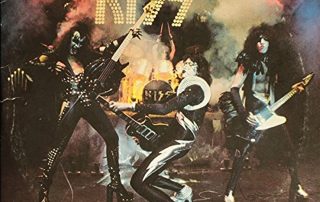 Kiss’ first live album “Alive!” is released
On 22. October, 1974, Kiss’ second album “Hotter than Hell” was released by Casablanca Records. It was certified gold on June 23, 1977, having shipped 500,000 copies. The album was re-released in 1997 in a remastered version. It peaked on the Billboard 200 charts at No. 100, without the benefit of a hit single. Many of the album’s songs are live staples for the band, including “Parasite”, “Hotter than Hell”, “Let Me Go, Rock ‘n’ Roll” and “Watchin’ You”.
The album was recorded at Village Recorder Studios in Santa Monica, Los Angeles, California, with producers Kenny Kerner and Richie Wise who had moved to California from New York.
Norman Zeef, photographer:
“The Hotter Than Hell photo shoot was done at the Raleigh stages in Hollywood. The front and back cover were shot on the same day. I had gone to Japan with my film crews and we published my book Hot Shots there. As part of my Japanese trip I was photographing and filming top Japanese groups. I also wanted to meet Japanese artists in different arenas. It was a whole ensemble of young Japanese art directors, photographers, and producers. One of the people they introduced me to was Tadanori Yokoo, a profoundly exciting Japanese artist. He was a guy who was pushing the envelope in Japan when Japan was still very conservative. Yokoo wasn’t a copyist; he took his imagery out of traditional Japanese art. I was very excited by what he was doing. He was a combination of Timothy Leary, Andy Warhol, and Picasso.”
– “Nothin’ to Lose: The making of Kiss (1972-1975)” by Ken Sharp, Gene Simmons, and Paul Stanley.
John Van Hamersveld, designer:
“In that period, I’d designed album covers for the Rolling Stones (Exile on Main Street), the Grateful Dead (Skeletons from the Closet), Bob Dylan (Pat Garrett & Billy the Kid), and Steve Miller (The Joker). The Norman Seeff photography studio was just down the street from Casablanca Records, on the Sunset Strip. Norman had been selling photos to Neil Bogart for artists like Donna Summer and Johnny Carson. Norman was the rock entertainment photographer at the time and everyone wanted his style of photograph. He called me at the Chapman Park Studio Building in LA where I was packaging album covers at that time. He explained he needed me to pull the package together for the band and Casablanca Records real quickly.”
– “Nothin’ to Lose: The making of Kiss (1972-1975)” by Ken Sharp, Gene Simmons, and Paul Stanley.
Paul Stanley:
“Hotter Than Hell was an amazing cover that really captured the band. It was the first thing I saw that truly reached beyond the American album covers typical of the time, which I thought were so boring. I was a huge fan of British albums and album art, and the cover of Hotter Than Hell really smacked more to me of [Cream’s] Disraeli Gears as opposed to Marshall Tucker. The Japanese writing was wild and came out of nowhere. The essence of that cover was so far-reaching it really blew me away.”
– “Nothin’ to Lose: The making of Kiss (1972-1975)” by Ken Sharp, Gene Simmons, and Paul Stanley.
Paul Stanley:
“I’d give Hotter Than Hell three stars. There’s some songs I really like. Hotter Than Hellwas the first album where we couldn’t rely on material we’d written in high school and forward. Although there were some leftover songs on the album from our club days, it really came down to writing a new batch of songs, which was daunting. We had years to sift through all our best material for the first album. For the second album it was instant rock. We hoped to remedy the sonic deficiencies we found in the first album. We were never as rock-‘n’-rolly or good-timey as we sounded on that album. We were much heavier live. So we tried to capture sonically how we sounded live. Unfortunately, the people that we were working with might not have been the right people to be doing it with. It was our first extended trip to Los Angeles. We were living the rock ‘n’ roll lifestyle of an up-and-coming band at the Ramada on Sunset. We were listening to Mott the Hoople, just hanging out, and having a cool time. The party that went into the photo session for that album kind of summed up what life was like in L.A. at that time.
“Hotter Than Hell” was a real cool tune that was very much influenced by Free, the whole idea of sparse playing and storytelling. It had that simplicity, a framework to sing over and certain chord voicings that Free used in “All Right Now.” Even thematically, “All Right Now” told the story of seeing a girl in the street and a guy trying to pick her up. “Hotter Than Hell” is about a guy seeing a girl and trying to pick her up and what she replies to him, which is basically the same thing that happens in “All Right Now.” The song didn’t have an end to it. It could have just gone out with the chorus but I had this guitar figure, which at the time I thought was more like “Iron Man” by Black Sabbath. It just became the tag that Ace soloed over and we went out on that.
“Rock Bottom” was a weird song because it was actually two different things. Ace wrote the intro and | wrote the actual song. Every once in a while | write a song in the key of A that has a certain sound to it. “Hotter Than Hell” was like that and “Rock Bottom” had that. There are all kinds of songs based in some way on “All Right Now” by Free.”
– “Kiss Behind The Mask: The Official Authorized Biography” by Ken Sharp & David Leaf.
Peter Criss:
“I did miss New York. I’m from Brooklyn and I thought I was on another planet. It was tough on us. We were never away from home that long. But it was a great album. We had a lot of fun. I love “Mainline” and “Strange Ways.” I loved singing them because I went in, there was nobody on my ass, they let me sing the way I wanted to sing and the proof is in the pudding.”
– “Kiss Behind The Mask: The Official Authorized Biography” by Ken Sharp & David Leaf.
Related Kiss posts:
Kiss tapes their appearance on The Mike Douglas Show
Kiss releases their tenth studio album “Creatures of the Night”
Kiss releases their second live album “Alive II”
Kiss releases their third studio album “Dressed to Kill”
Kiss releases their fourth studio album “Destroyer”
Kiss’ first live album “Alive!” is released