
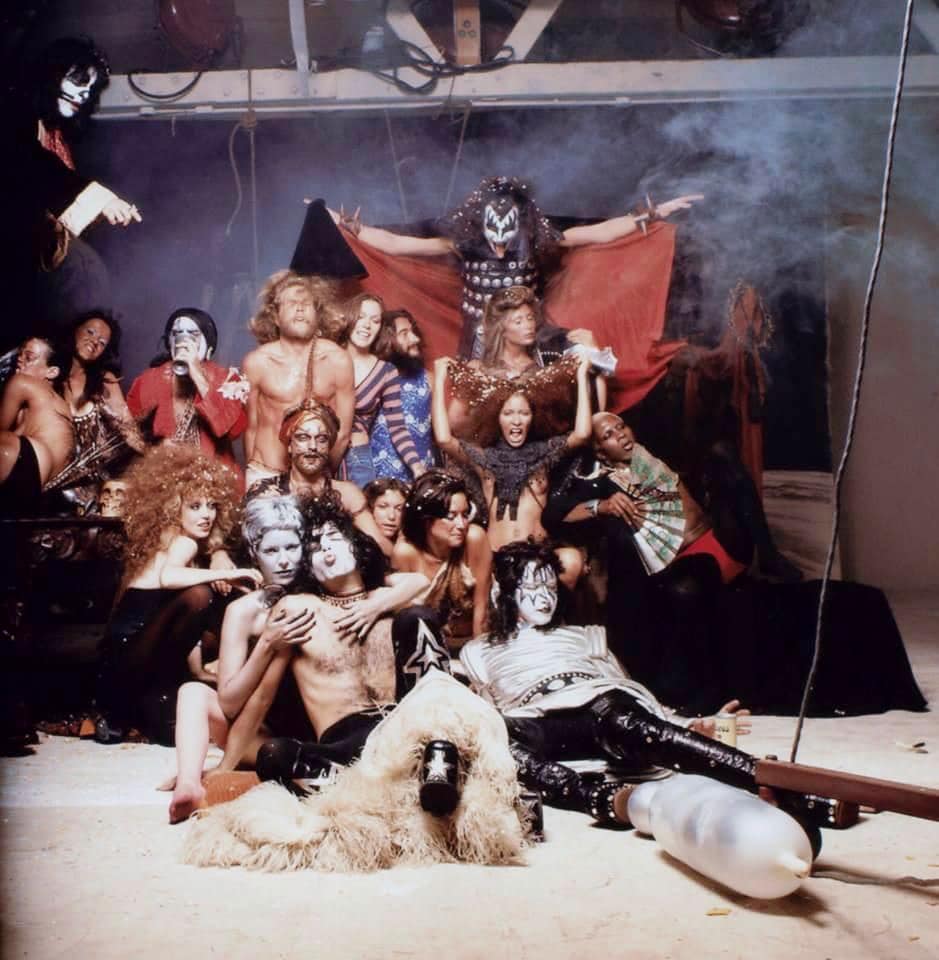
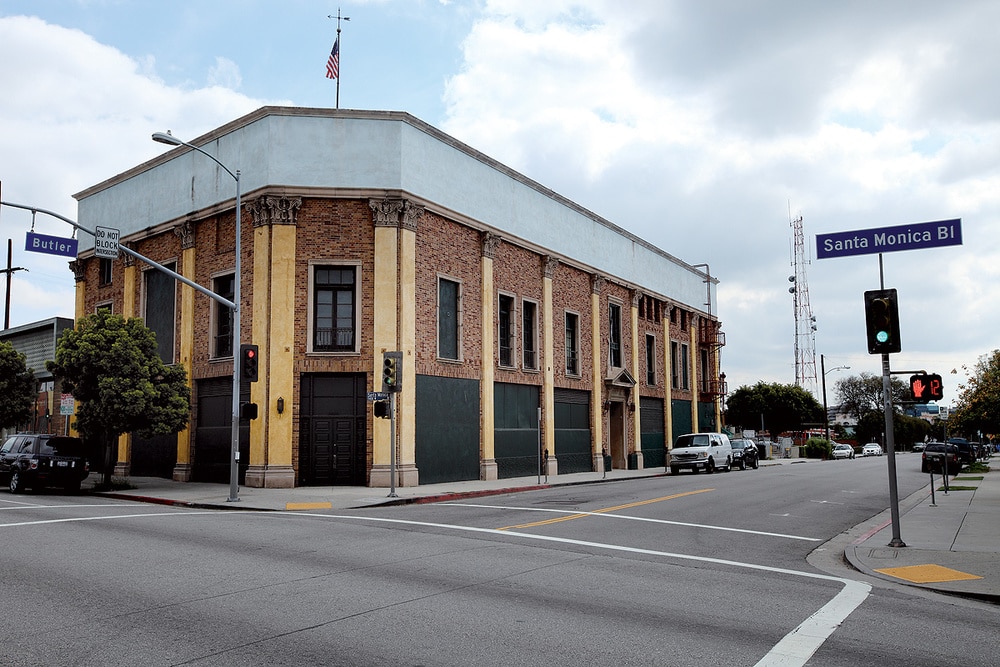
On 16. August, 1974, Kiss began recording “Hotter Than Hell” at Village Recorder Studios in Santa Monica, Los Angeles, California, with producers Kenny Kerner and Richie Wise who had moved to California from New York. Bogart wanted the band working with the same people as on the first album. Since the pair had relocated to Los Angeles, Kiss flew there to work with them. The band, all native New Yorkers, immediately developed a dislike for their new surroundings. Paul Stanley’s guitar was stolen his first day in Los Angeles.
“Hotter Than Hell” was recorded in August and September 1974. Engineered and mixed by Warren Dewey at The Village Recorder. Mastered at Allen Zentz, Los Angeles, CA.
This album was originally going to be titled, “The Harder They Come” (Circus, 1974) but didn’t turn out to be the “second burn triumph” they hoped for.
Ace Frehley:
In August 1974 we paused in the middle of a tour and relocated to Los Angeles to work on the second Kiss album, “Hotter Than Hell”. As with the first record, it was an intense experience: three weeks of ten-hour days at Village Recorders, again with Richie Wise and Kenny Kerner producing. We were all tired and starting to feel some pressure from Casablanca, as the first record hadn’t exactly been a big hit. Yeah, it had sold around 75,000 copies, but that hadn’t even been enough to cover the band’s expenses. We hoped to do better with Hotter than Hell, but everything was happening so fast that it was becoming hard to tell whether we were even on the right track.
– “No Regrets” by Ace Frehley
Richie Wize, producer:
“I wanted to make a harder, more forceful record. I thought the guitars on the first album weren’t distorted enough. After seeing KISS live I wanted to make a record that was more livesounding. There were some good songs on Hotter Than Hell but a better recording would have served it better.”
– “Nothin’ to Lose: The making of Kiss (1972-1975)” by Ken Sharp, Gene Simmons, and Paul Stanley.
Kenny Kerner, producer:
“The material wasn’t as strong on Hotter Than Hell. It’s the old story: you have all your life to write your songs for your first album and six months to come up with the songs for the second album. It took a little bit longer to record than the first album, but it wasn’t a Fleetwood Mac album [laughs]. It was recorded live, but we did a lot more overdubs and vocals. So it sounds a little more finished and polished. Neil gave us zero input on the album. He kept his distance. He may have shown up after dinner and said, “Hi guys, how’s it going? Can I hear something?”
– “Nothin’ to Lose: The making of Kiss (1972-1975)” by Ken Sharp, Gene Simmons, and Paul Stanley.
Ace Frehley:
“Hotter Than Hell was a harder album to record than our first record because we had toured so extensively and then all of a sudden the record company wanted us to put out another album. You don’t have ten songs you’ve been rehearsing for a year. That was a tougher record to do but it was fun and it was different. Working in LA was fun. It was the first time we were out there.”
– “Nothin’ to Lose: The making of Kiss (1972-1975)” by Ken Sharp, Gene Simmons, and Paul Stanley.
Paul Stanley:
“We had a grand old time and were living large. It was a real eye-opening period coming out to Los Angeles and the amount of women was staggering. We were within walking distance of the Rainbow. The Rainbow became my version of a church or synagogue. I was there every night ’cause it was full of women whose only criteria for going back to the hotel with you was that you were in a band, and that suited me fine.
Hotter Than Hell was the first album where we couldn’t rely on material that we had written in high school. Although there were some leftover songs on the album from our club days, it really came down to writing a new batch of songs, which was daunting. There was a lot of pressure on Gene and myself because we had years to sift through all our material to come up with what we felt was the best material for the first album. For the second album it was instant rock. We only had a couple of months to write the songs. We were recording the album at Village Recorders in Santa Monica and wanted to make a sonically more accurate record of who we were, but unfortunately that got lost in the mix. It’s not a great-sounding album, but the material is really good. In hindsight, not only did we want to make the record heavier but we were also trying to make the writing a little heavier to compensate for what we felt was missing from the first album.”
– “Nothin’ to Lose: The making of Kiss (1972-1975)” by Ken Sharp, Gene Simmons, and Paul Stanley.
Gene Simmons:
“During the recording of Hotter Than Hell was the first time we realized we had two troubled guys in the band— Peter and Ace. Before they became chemically and booze addicted, before they got deep into it, the dark side of Ace and Peter came out. The demands, the entitlement, the irresponsibility, not showing up on time and being self-destructive and being confrontational to the guys in your own band who helped make all of this possible. During Hotter Than Hell, Peter confronted Paul and I and said, “If I don’t have a song to sing on this record I’m leaving the band” so Paul gave him the song “Mainline” to sing. We initially liked that arrogant bravado and appreciated a guy that stood up for himself, but threatening to leave the band was out of line. And he did it again while we were recording Ace’s song, “Strange Ways.” Peter did a seven-minute drum solo on that song and it was horrible. It was the worst thing we ever heard. He threatened to leave the band again if we cut the solo but we did it anyway.”
– “Nothin’ to Lose: The making of Kiss (1972-1975)” by Ken Sharp, Gene Simmons, and Paul Stanley.
Gene Simmons:
“When we were doing Hotter Than Hell, we had risen in salary to $85, from $75 a week. We couldn’t afford room service because we were staying in hotels. We would literally go to the grocery store and buy beans and eggs and subsist as best we could. We didn’t have this sense that we were going to scale the heights and yet we were happy. Even back then it was obvious that I had nothing in common with Ace and Peter socially. With Paul I could communicate because he was a straight guy and responsible. With Ace and Peter if I wanted to have a good time, for them it was spelled “b-o-m-b-e-d.” The priorities were different. All those variables went into it as a record. Some of the small demons within the band started to raise their head. The difference in the personalities were starting to come into the band and between its members. Even though it was the same production team as the first album, we didn’t have the temperament to stick it out and do a proper studio album. That takes time. We weren’t experienced. Another thing was it was torture being with the same guys seven days a week. The production values of the record had more to do with “Gee, I like that song more than that song.” It didn’t have to do with real engineering styles. We were all like blind men walking through the dark.”
– “Kiss Behind The Mask: The Official Authorized Biography” by Ken Sharp & David Leaf.
Related Kiss posts:
 Ace Frehley crashing the crew’s car in the Hollywood Hills
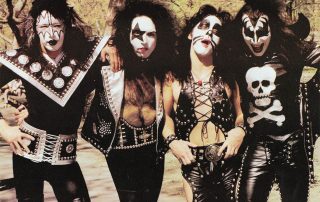 Kiss photo session in Central Park, New York
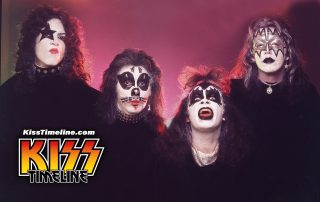 Kiss does the debut album photo session
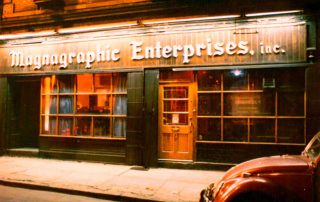 Kiss enters Magnagraphics studio, NY, to record a demo
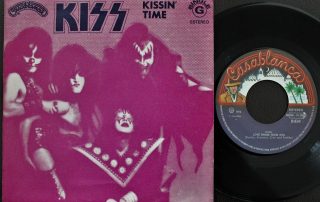 Kiss returns to Bell Sound Studios to record “Kissin’ Time”
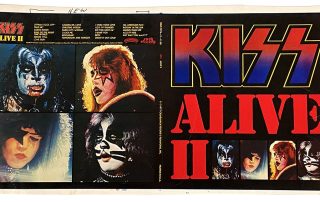 Kiss releases their second live album “Alive II”
On 16. August, 1974, Kiss began recording “Hotter Than Hell” at Village Recorder Studios in Santa Monica, Los Angeles, California, with producers Kenny Kerner and Richie Wise who had moved to California from New York. Bogart wanted the band working with the same people as on the first album. Since the pair had relocated to Los Angeles, Kiss flew there to work with them. The band, all native New Yorkers, immediately developed a dislike for their new surroundings. Paul Stanley’s guitar was stolen his first day in Los Angeles.
“Hotter Than Hell” was recorded in August and September 1974. Engineered and mixed by Warren Dewey at The Village Recorder. Mastered at Allen Zentz, Los Angeles, CA.
This album was originally going to be titled, “The Harder They Come” (Circus, 1974) but didn’t turn out to be the “second burn triumph” they hoped for.
Ace Frehley:
In August 1974 we paused in the middle of a tour and relocated to Los Angeles to work on the second Kiss album, “Hotter Than Hell”. As with the first record, it was an intense experience: three weeks of ten-hour days at Village Recorders, again with Richie Wise and Kenny Kerner producing. We were all tired and starting to feel some pressure from Casablanca, as the first record hadn’t exactly been a big hit. Yeah, it had sold around 75,000 copies, but that hadn’t even been enough to cover the band’s expenses. We hoped to do better with Hotter than Hell, but everything was happening so fast that it was becoming hard to tell whether we were even on the right track.
– “No Regrets” by Ace Frehley
Richie Wize, producer:
“I wanted to make a harder, more forceful record. I thought the guitars on the first album weren’t distorted enough. After seeing KISS live I wanted to make a record that was more livesounding. There were some good songs on Hotter Than Hell but a better recording would have served it better.”
– “Nothin’ to Lose: The making of Kiss (1972-1975)” by Ken Sharp, Gene Simmons, and Paul Stanley.
Kenny Kerner, producer:
“The material wasn’t as strong on Hotter Than Hell. It’s the old story: you have all your life to write your songs for your first album and six months to come up with the songs for the second album. It took a little bit longer to record than the first album, but it wasn’t a Fleetwood Mac album [laughs]. It was recorded live, but we did a lot more overdubs and vocals. So it sounds a little more finished and polished. Neil gave us zero input on the album. He kept his distance. He may have shown up after dinner and said, “Hi guys, how’s it going? Can I hear something?”
– “Nothin’ to Lose: The making of Kiss (1972-1975)” by Ken Sharp, Gene Simmons, and Paul Stanley.
Ace Frehley:
“Hotter Than Hell was a harder album to record than our first record because we had toured so extensively and then all of a sudden the record company wanted us to put out another album. You don’t have ten songs you’ve been rehearsing for a year. That was a tougher record to do but it was fun and it was different. Working in LA was fun. It was the first time we were out there.”
– “Nothin’ to Lose: The making of Kiss (1972-1975)” by Ken Sharp, Gene Simmons, and Paul Stanley.
Paul Stanley:
“We had a grand old time and were living large. It was a real eye-opening period coming out to Los Angeles and the amount of women was staggering. We were within walking distance of the Rainbow. The Rainbow became my version of a church or synagogue. I was there every night ’cause it was full of women whose only criteria for going back to the hotel with you was that you were in a band, and that suited me fine.
Hotter Than Hell was the first album where we couldn’t rely on material that we had written in high school. Although there were some leftover songs on the album from our club days, it really came down to writing a new batch of songs, which was daunting. There was a lot of pressure on Gene and myself because we had years to sift through all our material to come up with what we felt was the best material for the first album. For the second album it was instant rock. We only had a couple of months to write the songs. We were recording the album at Village Recorders in Santa Monica and wanted to make a sonically more accurate record of who we were, but unfortunately that got lost in the mix. It’s not a great-sounding album, but the material is really good. In hindsight, not only did we want to make the record heavier but we were also trying to make the writing a little heavier to compensate for what we felt was missing from the first album.”
– “Nothin’ to Lose: The making of Kiss (1972-1975)” by Ken Sharp, Gene Simmons, and Paul Stanley.
Gene Simmons:
“During the recording of Hotter Than Hell was the first time we realized we had two troubled guys in the band— Peter and Ace. Before they became chemically and booze addicted, before they got deep into it, the dark side of Ace and Peter came out. The demands, the entitlement, the irresponsibility, not showing up on time and being self-destructive and being confrontational to the guys in your own band who helped make all of this possible. During Hotter Than Hell, Peter confronted Paul and I and said, “If I don’t have a song to sing on this record I’m leaving the band” so Paul gave him the song “Mainline” to sing. We initially liked that arrogant bravado and appreciated a guy that stood up for himself, but threatening to leave the band was out of line. And he did it again while we were recording Ace’s song, “Strange Ways.” Peter did a seven-minute drum solo on that song and it was horrible. It was the worst thing we ever heard. He threatened to leave the band again if we cut the solo but we did it anyway.”
– “Nothin’ to Lose: The making of Kiss (1972-1975)” by Ken Sharp, Gene Simmons, and Paul Stanley.
Gene Simmons:
“When we were doing Hotter Than Hell, we had risen in salary to $85, from $75 a week. We couldn’t afford room service because we were staying in hotels. We would literally go to the grocery store and buy beans and eggs and subsist as best we could. We didn’t have this sense that we were going to scale the heights and yet we were happy. Even back then it was obvious that I had nothing in common with Ace and Peter socially. With Paul I could communicate because he was a straight guy and responsible. With Ace and Peter if I wanted to have a good time, for them it was spelled “b-o-m-b-e-d.” The priorities were different. All those variables went into it as a record. Some of the small demons within the band started to raise their head. The difference in the personalities were starting to come into the band and between its members. Even though it was the same production team as the first album, we didn’t have the temperament to stick it out and do a proper studio album. That takes time. We weren’t experienced. Another thing was it was torture being with the same guys seven days a week. The production values of the record had more to do with “Gee, I like that song more than that song.” It didn’t have to do with real engineering styles. We were all like blind men walking through the dark.”
– “Kiss Behind The Mask: The Official Authorized Biography” by Ken Sharp & David Leaf.
Related Kiss posts:
Ace Frehley crashing the crew’s car in the Hollywood Hills
Kiss photo session in Central Park, New York
Kiss does the debut album photo session
Kiss enters Magnagraphics studio, NY, to record a demo
Kiss returns to Bell Sound Studios to record “Kissin’ Time”
Kiss releases their second live album “Alive II”