
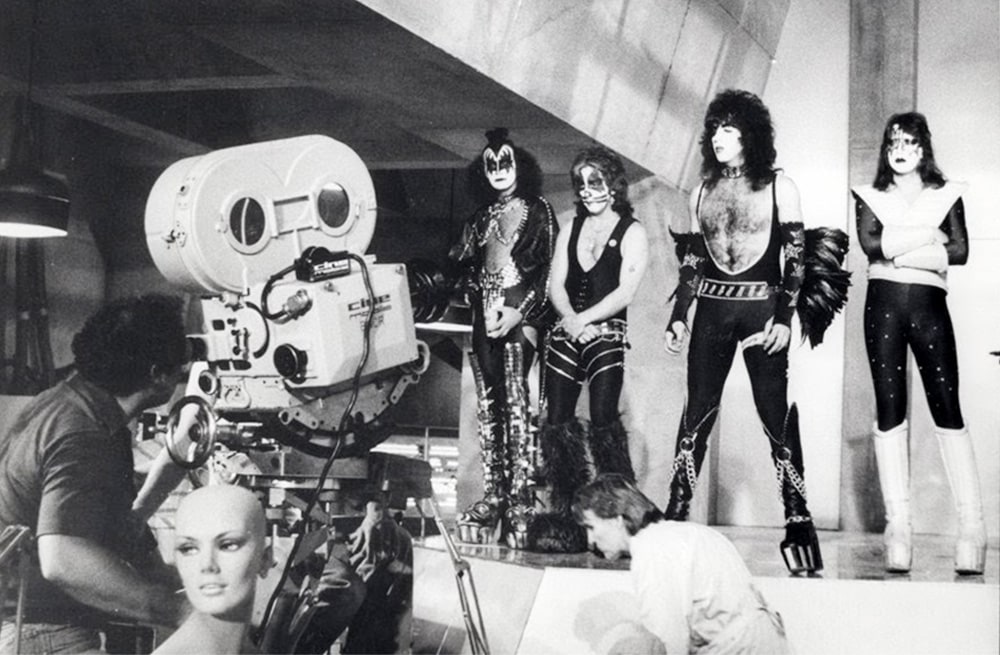

On 24. April, 1978, Kiss released its first greatest hits album, “Double Platinum”. In order to make the album sonically coherent, many of the songs on “Double Platinum” were remixed and differed from their original versions: in the case of “Strutter,” it was re-recorded with a slight disco beat and dubbed “Strutter ’78.” Other songs (“Hard Luck Woman,” “Detroit Rock City”) had sections completely removed, while the beginning of “Black Diamond” was repeated at the end, fading out at the start of the first verse and giving the song a “wrap around” feel.
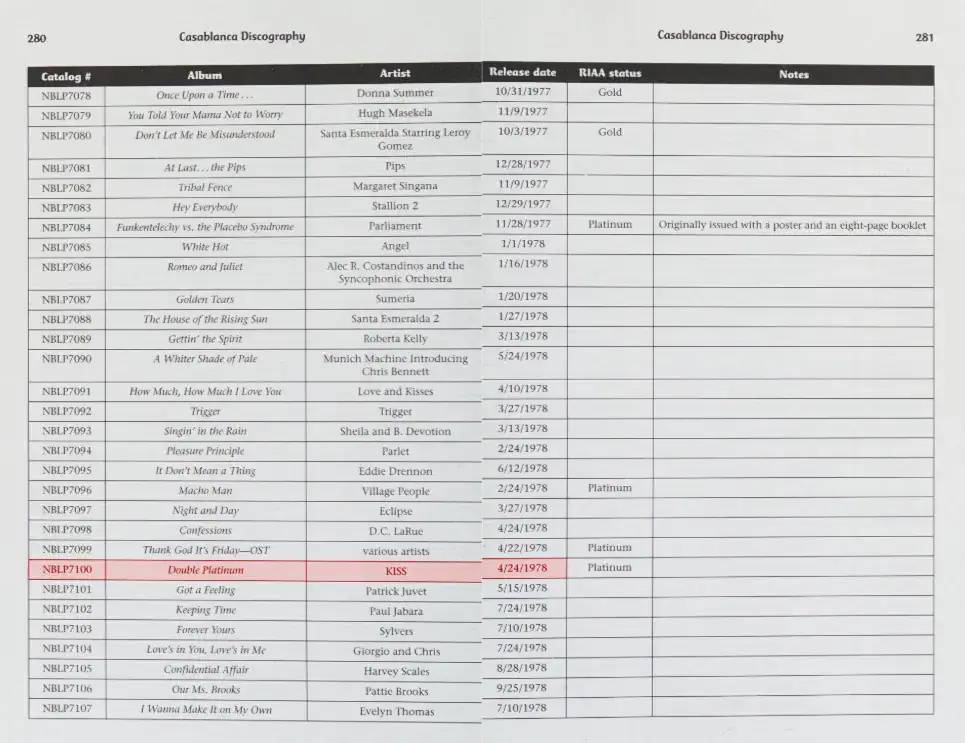
Some outlets (like Kiss themselves…) say the album was released April 2nd, but the book “And Party Every Day: The Inside Story of Casablanca Records” by Larry Alan Harris lists it as NBLP7100 4/24/1978.
The Japanese single release of “Strutter ’78” includes a different version to that on the album: faster and shorter, with an altered guitar solo, plus a more prominent hi-hat (cymbal) sound throughout.
The original vinyl release, in a gatefold sleeve, had an embossed, silver-foiled sleeve, with the band members in bas-relief inside. The album was packaged with a printed “Platinum Award” thanking the Kiss Army for making the band a “Double Platinum Success”. Later reissues would retain the gatefold sleeve but replaced the logo with a printed, red-type version and the band members were now represented inside by photos rather than the base illustrations. When the album was remastered for CD in the US in 1997, it mimicked the original vinyl.
Ace Frehley about “Strutter ’78”:
“I thought it was kind of a silly thing to do because I don’t think the new version was that different. It was just extended solos and what-not. And as far as the DOUBLE PLATINUM record, Sean Delaney and Mike Stone, they did a lot of re-mixing of songs and we weren’t there at the time and I think it could have been done better.”
Sean Delaney:
“KISS needed product because the solo albums was the next big thing that was coming out. It was going to take a period of time and they needed something to come out from KISS now. KISS always flooded the market, there was no slow-down on doing albums. We had finished Gene’s solo album, the part in England. All of a sudden I get a phone call from Bill [Aucoin] and Neil Bogart. They want us to sequence together enough songs for an album called Double Platinum. They sent us the quarter-inch tapes for us to sequence together. Then we found something horrible. As we tried to put two songs back-to-back they would sound totally different. One would be really strong-sounding and one would sound totally weak. You couldn’t put them back-to-back because of the drastic difference in the sound. We had to literally get the master tapes sent from New York to us in London. We were at Trident Studios, myself and the engineer, Mike Stone. KISS’s receptionist was the courier. The tapes had to be hand-carried, these were the master tapes. So she was allowed to fly to London, deliver them to us, and go straight back to the airport and fly straight back. She wasn’t even allowed to stay a weekend in London. Mike and I got these master tapes and we started listening to each one. Try to imagine being told over the phone after you’ve just gone several weeks of almost never leaving the studio that you have to do twenty-one titles. And they have to be done in nine days. Mike Stone and I almost had a nervous breakdown. But we did it within the time frame.”
– “Kiss Behind The Mask: The Official Authorized Biography” by Ken Sharp & David Leaf.
Dennis Woloch:
“That album cover was a technical feat. We printed the cover on Mylar. We could have printed on foil paper, which would have held the emboss a lot better. My boss, Howard [Marks], insisted on Mylar, which is a plastic material. Unfortunately, Mylar has a memory so when you bend it, stretch it, and try to emboss it, eventually it’s gonna go back to where it wants to go back to. It remembers that it’s supposed to be flat, it has this memory. So consequently it doesn’t hold a really high emboss. But the upside was it’s the shiniest material around, very silvery. So that’s why we did it with the Mylar. It was a technical feat. The printer got printing awards for that album.”
– “Kiss Behind The Mask: The Official Authorized Biography” by Ken Sharp & David Leaf.

Related Kiss posts:
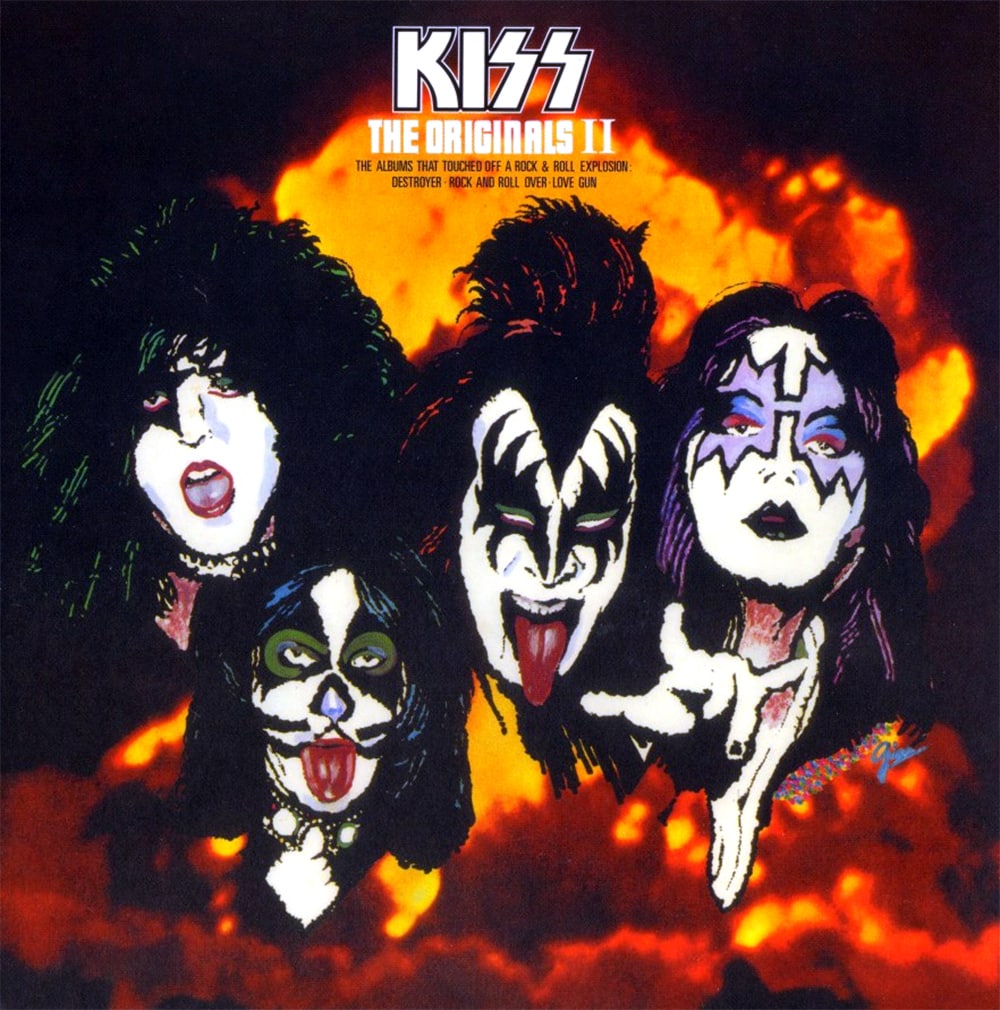
 Kiss releases the compilation 3LP box set “The Originals II” in Japan
 Kiss airs their film “Kiss Meets the Phantom of the Park”
 Kiss releases four solo albums
 Kiss releases their second live album “Alive II”
 Kiss releases their second studio album “Hotter than Hell”
 Kiss releases their third studio album “Dressed to Kill”
On 24. April, 1978, Kiss released its first greatest hits album, “Double Platinum”. In order to make the album sonically coherent, many of the songs on “Double Platinum” were remixed and differed from their original versions: in the case of “Strutter,” it was re-recorded with a slight disco beat and dubbed “Strutter ’78.” Other songs (“Hard Luck Woman,” “Detroit Rock City”) had sections completely removed, while the beginning of “Black Diamond” was repeated at the end, fading out at the start of the first verse and giving the song a “wrap around” feel.
Some outlets (like Kiss themselves…) say the album was released April 2nd, but the book “And Party Every Day: The Inside Story of Casablanca Records” by Larry Alan Harris lists it as NBLP7100 4/24/1978.
The Japanese single release of “Strutter ’78” includes a different version to that on the album: faster and shorter, with an altered guitar solo, plus a more prominent hi-hat (cymbal) sound throughout.
The original vinyl release, in a gatefold sleeve, had an embossed, silver-foiled sleeve, with the band members in bas-relief inside. The album was packaged with a printed “Platinum Award” thanking the Kiss Army for making the band a “Double Platinum Success”. Later reissues would retain the gatefold sleeve but replaced the logo with a printed, red-type version and the band members were now represented inside by photos rather than the base illustrations. When the album was remastered for CD in the US in 1997, it mimicked the original vinyl.
Ace Frehley about “Strutter ’78”:
“I thought it was kind of a silly thing to do because I don’t think the new version was that different. It was just extended solos and what-not. And as far as the DOUBLE PLATINUM record, Sean Delaney and Mike Stone, they did a lot of re-mixing of songs and we weren’t there at the time and I think it could have been done better.”
Sean Delaney:
“KISS needed product because the solo albums was the next big thing that was coming out. It was going to take a period of time and they needed something to come out from KISS now. KISS always flooded the market, there was no slow-down on doing albums. We had finished Gene’s solo album, the part in England. All of a sudden I get a phone call from Bill [Aucoin] and Neil Bogart. They want us to sequence together enough songs for an album called Double Platinum. They sent us the quarter-inch tapes for us to sequence together. Then we found something horrible. As we tried to put two songs back-to-back they would sound totally different. One would be really strong-sounding and one would sound totally weak. You couldn’t put them back-to-back because of the drastic difference in the sound. We had to literally get the master tapes sent from New York to us in London. We were at Trident Studios, myself and the engineer, Mike Stone. KISS’s receptionist was the courier. The tapes had to be hand-carried, these were the master tapes. So she was allowed to fly to London, deliver them to us, and go straight back to the airport and fly straight back. She wasn’t even allowed to stay a weekend in London. Mike and I got these master tapes and we started listening to each one. Try to imagine being told over the phone after you’ve just gone several weeks of almost never leaving the studio that you have to do twenty-one titles. And they have to be done in nine days. Mike Stone and I almost had a nervous breakdown. But we did it within the time frame.”
– “Kiss Behind The Mask: The Official Authorized Biography” by Ken Sharp & David Leaf.
Dennis Woloch:
“That album cover was a technical feat. We printed the cover on Mylar. We could have printed on foil paper, which would have held the emboss a lot better. My boss, Howard [Marks], insisted on Mylar, which is a plastic material. Unfortunately, Mylar has a memory so when you bend it, stretch it, and try to emboss it, eventually it’s gonna go back to where it wants to go back to. It remembers that it’s supposed to be flat, it has this memory. So consequently it doesn’t hold a really high emboss. But the upside was it’s the shiniest material around, very silvery. So that’s why we did it with the Mylar. It was a technical feat. The printer got printing awards for that album.”
– “Kiss Behind The Mask: The Official Authorized Biography” by Ken Sharp & David Leaf.
Related Kiss posts:
Kiss releases the compilation 3LP box set “The Originals II” in Japan
Kiss airs their film “Kiss Meets the Phantom of the Park”
Kiss releases four solo albums
Kiss releases their second live album “Alive II”
Kiss releases their second studio album “Hotter than Hell”
Kiss releases their third studio album “Dressed to Kill”