
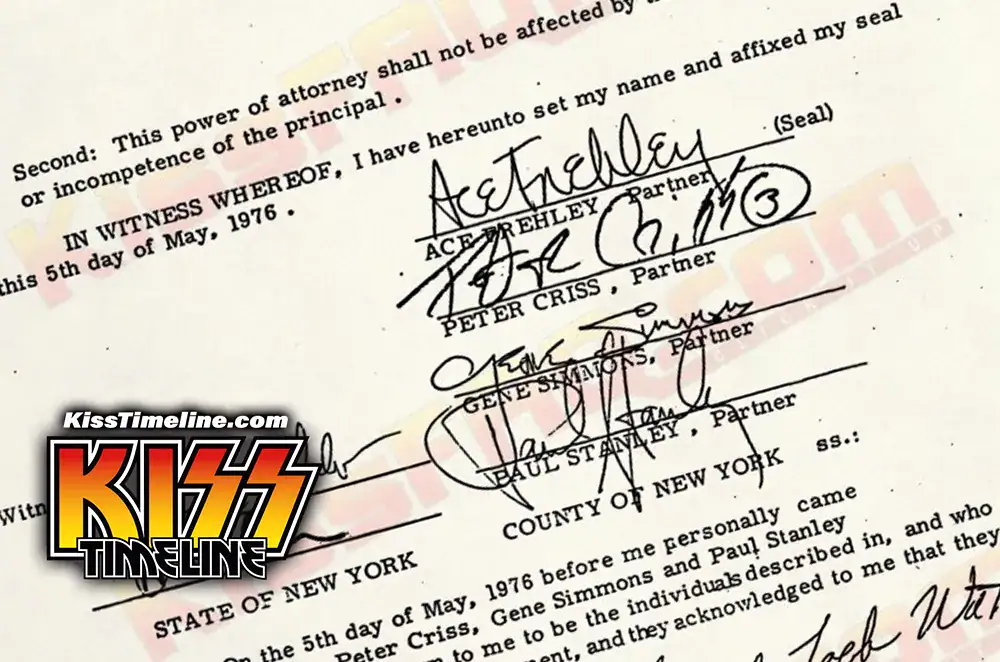
On 5. May, 1976, Kiss signed a management agreement with Glickman/Marks Management Corporation, formally appointing Carl D. Glickman and Howard L. Marks as the band’s business managers.
The newly appointed business managers presented Kiss with a comprehensive plan to restructure the band’s business affairs and renegotiate their recording agreement with Casablanca Records. Having officially assumed management responsibilities the previous month, Glickman and Marks were granted broad power of attorney to oversee the group’s finances, banking, investments, insurance, bookkeeping, and business operations, with authority to approve transactions of up to $100,000 on the band’s behalf.
The appointment came at a pivotal point in Kiss’ career. Although the band had signed a renegotiated recording contract with Casablanca Records on 1. May, 1975, the agreement predated the massive commercial breakthrough of “Alive!”. With Kiss rapidly becoming one of rock’s biggest attractions, Glickman and Marks set out to professionalize every aspect of the band’s organization. One of their first initiatives was a complete reorganization of the touring operation for the “Destroyer” tour, replacing much of the existing road crew while introducing tighter financial controls, cost analysis, and new revenue strategies that would define the band’s touring business for the remainder of the 1970s.
The most important objective, however, was securing a significantly improved recording contract. In a detailed memorandum dated 21. June, Glickman and Marks outlined an ambitious proposal for a new five-year agreement with Casablanca. Their recommendations included a $250,000 signing bonus, non-refundable advances beginning at $1,000,000, recording budgets of up to $50,000 per album, a guaranteed $1,000,000 annual advertising commitment, a dedicated public relations budget, and royalty rates that would increase with sales, reaching as high as 20 percent once an album exceeded one million copies.
Negotiations continued for more than six months before a new agreement was finalized on 1. January, 1977. Although Casablanca did not accept every demand, the new contract represented a dramatic improvement over the band’s previous deal. Kiss received substantially larger album advances, increased recording budgets, guaranteed promotional support, and significantly higher royalty rates, reflecting the band’s remarkable rise from a promising hard rock act to one of the music industry’s biggest commercial successes.
Source: kissfaq.com
Related Kiss posts:
 Kiss is filmed backstage in Toronto by CBS
 Gene Simmons interviewed on the TV pilot for The Toni Tennille Show
 Bill Aucoin sees Kiss play for the first time
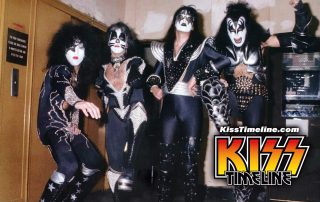 Kiss reveals the new prototype “Destroyer” costumes for the first time
 Kiss releases their fourth studio album “Destroyer”
 Kiss releases their fifth studio album “Rock and Roll Over”
On 5. May, 1976, Kiss signed a management agreement with Glickman/Marks Management Corporation, formally appointing Carl D. Glickman and Howard L. Marks as the band’s business managers.
The newly appointed business managers presented Kiss with a comprehensive plan to restructure the band’s business affairs and renegotiate their recording agreement with Casablanca Records. Having officially assumed management responsibilities the previous month, Glickman and Marks were granted broad power of attorney to oversee the group’s finances, banking, investments, insurance, bookkeeping, and business operations, with authority to approve transactions of up to $100,000 on the band’s behalf.
The appointment came at a pivotal point in Kiss’ career. Although the band had signed a renegotiated recording contract with Casablanca Records on 1. May, 1975, the agreement predated the massive commercial breakthrough of “Alive!”. With Kiss rapidly becoming one of rock’s biggest attractions, Glickman and Marks set out to professionalize every aspect of the band’s organization. One of their first initiatives was a complete reorganization of the touring operation for the “Destroyer” tour, replacing much of the existing road crew while introducing tighter financial controls, cost analysis, and new revenue strategies that would define the band’s touring business for the remainder of the 1970s.
The most important objective, however, was securing a significantly improved recording contract. In a detailed memorandum dated 21. June, Glickman and Marks outlined an ambitious proposal for a new five-year agreement with Casablanca. Their recommendations included a $250,000 signing bonus, non-refundable advances beginning at $1,000,000, recording budgets of up to $50,000 per album, a guaranteed $1,000,000 annual advertising commitment, a dedicated public relations budget, and royalty rates that would increase with sales, reaching as high as 20 percent once an album exceeded one million copies.
Negotiations continued for more than six months before a new agreement was finalized on 1. January, 1977. Although Casablanca did not accept every demand, the new contract represented a dramatic improvement over the band’s previous deal. Kiss received substantially larger album advances, increased recording budgets, guaranteed promotional support, and significantly higher royalty rates, reflecting the band’s remarkable rise from a promising hard rock act to one of the music industry’s biggest commercial successes.
Source: kissfaq.com
Related Kiss posts:
Kiss is filmed backstage in Toronto by CBS
Gene Simmons interviewed on the TV pilot for The Toni Tennille Show
Bill Aucoin sees Kiss play for the first time
Kiss reveals the new prototype “Destroyer” costumes for the first time
Kiss releases their fourth studio album “Destroyer”
Kiss releases their fifth studio album “Rock and Roll Over”