
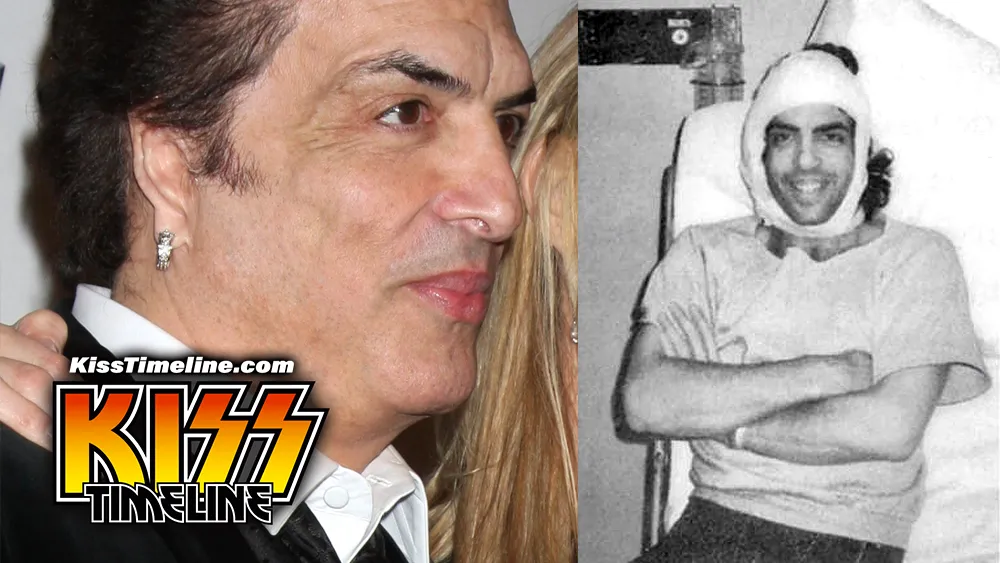
On 26. February, 1982, Paul Stanley underwent reconstructive surgery by Dr. Frederic Rueckert, a New Hampshire-based reconstructive surgeon, who successfully built Stanley a new right ear using cartilage removed from his rib cage. Paul suffered congenital ear deformity called Grade 3 Microtia.
Stanley kept the birth defect a secret for decades, hiding it with long hair, before eventually sharing his journey in his 2014 autobiography, “Face the Music: A Life Exposed”. Following Dr. Rueckert’s passing in 2017, Stanley paid tribute to the surgeon on X for giving him a new lease on life; “He truly changed my life when he constructed my right ear from my rib. God Bless You.”
Paul Stanley:
“There was a time when this makeup was a mask-hiding the face of a kid whose life up to then had been lonely and miserable. I was born with no right ear – I’m deaf on that side, too — and the most searing early memories I have are of other kids calling me “Stanley the one-eared monster.” It was often kids I didn’t even know. But they knew me: the kid with a stump for an ear. When I was out among people I felt naked. I was painfully aware of being constantly scrutinized. And when I came home, my family was too dysfunctional to provide any kind of support.
I was born with an ear deformity called microtia, in which the outer ear cartilage fails to form properly and, to varying degrees of severity, leaves you with just a crumpled mass of cartilage. I had nothing more than a stump on the right side of my head. And my ear canal was also closed, so I was deaf. That left me unable to tell the direction of sound, and more importantly, made it incredibly difficult for me to understand people when there was any kind of background noise or conversation. These problems would lead me to instinctively avoid social situations.
I flew up to Hanover to meet the doctor. Fred Rueckert was a warm, grandfatherly figure who exuded confidence and security, reinforced by all his experience. We hit it off imme- diately. He explained that the first part of the process would be to remove pieces of cartilage from my rib cage and carve them into the framework of an ear. Then the frame would be implanted and covered with a series of skin grafts. All in all, it would involve about five surgical procedures, taking skin and additional cartilage from my good left ear.
Nobody my age had ever had the surgery. They typically used this new technique on kids. But given the fact that I had such a tangible symbol and cause of so much pain, why wouldn’t I try to change it? Suddenly, I had hope. I hoped having two ears and erasing that constant reminder of my childhood would help me feel more complete on the inside. I wanted to move on.
The first thing they needed to do was cut out the sections of my rib. Before the surgery Dr. Rueckert warned me, “You’re going to be a little sore.”
You sometimes hear people talk about being aware of things even in a state of anesthesia. I guess it can be a terrifying experience. I was aware of everything during my first surgery as they cut my chest open, I could hear what they were saying even though I couldn’t open my eyes. I heard the doctor take out the piece of cartilage, heard him carving it, and then heard him say, “That looks good.” A nurse agreed with him.
The next day I had searing pain if I tried to move even slightly. “A little sore”? It felt as if somebody had put a sword through me.
The healing process after the skin grafts didn’t go so well. Circulation didn’t develop in certain areas, and I had to stay in the hospital for a few weeks as they monitored and worked to correct the problems to avoid the skin dying from lack of blood supply. My parents and niece were there with me in New Hampshire. Gene came, too. He was going through a period of being very afraid to fly, so I gave him a lot of credit for visiting and really appreciated it.
After the first procedure, although it wasn’t standard, I opted for a local anesthetic for the rest of the surgeries. So after each subsequent revision surgery, I could walk from the hospital to the Hanover Inn-a cozy old hotel right on the green in the middle of town. I took painkillers and watched TV and slept. It was all part of something very personal, so being alone felt good to me. I enjoyed doing it on my own – and anyway, I didn’t know any other way to do it. There was nobody I would have felt comfortable asking, “Will you go with me?”
By the time I left Hanover and went back to New York, I was still in bandages and dressings that needed to be changed daily. Normally, a doctor would handle that, but I ended up doing it myself and I actually enjoyed it because it gave me a sense of participating in the process. It was hard to look at, but it connected me that much more to my own development and — I hoped-improvement. I also was sleeping with protective plastic over my ear that was held in place by a thick leather head-and-chin strap. I had to wear it for months after each surgery.”
– “Face the music: A Life Exposed” by Paul Stanley.
Related Kiss posts:
 Paul Stanley using the star makeup live for the first time
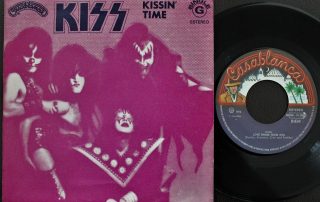 Kiss returns to Bell Sound Studios to record “Kissin’ Time”
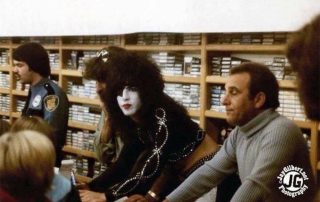 Paul Stanley in-store appearance at Peaches Records
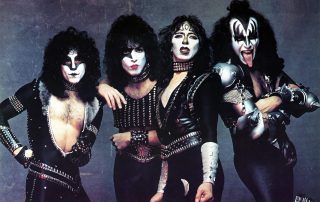 Kiss does a tour dress rehearsal and photo session
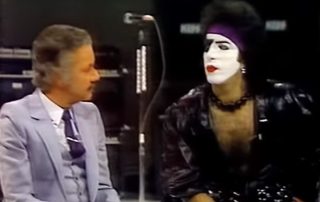 Kiss interviewed on the tv show Aplausos in Mexico
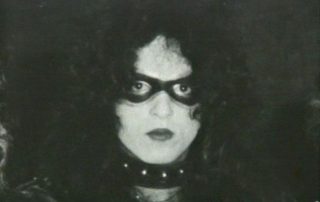 Paul Stanley plays his first show with the bandit make-up
On 26. February, 1982, Paul Stanley underwent reconstructive surgery by Dr. Frederic Rueckert, a New Hampshire-based reconstructive surgeon, who successfully built Stanley a new right ear using cartilage removed from his rib cage. Paul suffered congenital ear deformity called Grade 3 Microtia.
Stanley kept the birth defect a secret for decades, hiding it with long hair, before eventually sharing his journey in his 2014 autobiography, “Face the Music: A Life Exposed”. Following Dr. Rueckert’s passing in 2017, Stanley paid tribute to the surgeon on X for giving him a new lease on life; “He truly changed my life when he constructed my right ear from my rib. God Bless You.”
Paul Stanley:
“There was a time when this makeup was a mask-hiding the face of a kid whose life up to then had been lonely and miserable. I was born with no right ear – I’m deaf on that side, too — and the most searing early memories I have are of other kids calling me “Stanley the one-eared monster.” It was often kids I didn’t even know. But they knew me: the kid with a stump for an ear. When I was out among people I felt naked. I was painfully aware of being constantly scrutinized. And when I came home, my family was too dysfunctional to provide any kind of support.
I was born with an ear deformity called microtia, in which the outer ear cartilage fails to form properly and, to varying degrees of severity, leaves you with just a crumpled mass of cartilage. I had nothing more than a stump on the right side of my head. And my ear canal was also closed, so I was deaf. That left me unable to tell the direction of sound, and more importantly, made it incredibly difficult for me to understand people when there was any kind of background noise or conversation. These problems would lead me to instinctively avoid social situations.
I flew up to Hanover to meet the doctor. Fred Rueckert was a warm, grandfatherly figure who exuded confidence and security, reinforced by all his experience. We hit it off imme- diately. He explained that the first part of the process would be to remove pieces of cartilage from my rib cage and carve them into the framework of an ear. Then the frame would be implanted and covered with a series of skin grafts. All in all, it would involve about five surgical procedures, taking skin and additional cartilage from my good left ear.
Nobody my age had ever had the surgery. They typically used this new technique on kids. But given the fact that I had such a tangible symbol and cause of so much pain, why wouldn’t I try to change it? Suddenly, I had hope. I hoped having two ears and erasing that constant reminder of my childhood would help me feel more complete on the inside. I wanted to move on.
The first thing they needed to do was cut out the sections of my rib. Before the surgery Dr. Rueckert warned me, “You’re going to be a little sore.”
You sometimes hear people talk about being aware of things even in a state of anesthesia. I guess it can be a terrifying experience. I was aware of everything during my first surgery as they cut my chest open, I could hear what they were saying even though I couldn’t open my eyes. I heard the doctor take out the piece of cartilage, heard him carving it, and then heard him say, “That looks good.” A nurse agreed with him.
The next day I had searing pain if I tried to move even slightly. “A little sore”? It felt as if somebody had put a sword through me.
The healing process after the skin grafts didn’t go so well. Circulation didn’t develop in certain areas, and I had to stay in the hospital for a few weeks as they monitored and worked to correct the problems to avoid the skin dying from lack of blood supply. My parents and niece were there with me in New Hampshire. Gene came, too. He was going through a period of being very afraid to fly, so I gave him a lot of credit for visiting and really appreciated it.
After the first procedure, although it wasn’t standard, I opted for a local anesthetic for the rest of the surgeries. So after each subsequent revision surgery, I could walk from the hospital to the Hanover Inn-a cozy old hotel right on the green in the middle of town. I took painkillers and watched TV and slept. It was all part of something very personal, so being alone felt good to me. I enjoyed doing it on my own – and anyway, I didn’t know any other way to do it. There was nobody I would have felt comfortable asking, “Will you go with me?”
By the time I left Hanover and went back to New York, I was still in bandages and dressings that needed to be changed daily. Normally, a doctor would handle that, but I ended up doing it myself and I actually enjoyed it because it gave me a sense of participating in the process. It was hard to look at, but it connected me that much more to my own development and — I hoped-improvement. I also was sleeping with protective plastic over my ear that was held in place by a thick leather head-and-chin strap. I had to wear it for months after each surgery.”
– “Face the music: A Life Exposed” by Paul Stanley.
Related Kiss posts:
Paul Stanley using the star makeup live for the first time
Kiss returns to Bell Sound Studios to record “Kissin’ Time”
Paul Stanley in-store appearance at Peaches Records
Kiss does a tour dress rehearsal and photo session
Kiss interviewed on the tv show Aplausos in Mexico
Paul Stanley plays his first show with the bandit make-up